
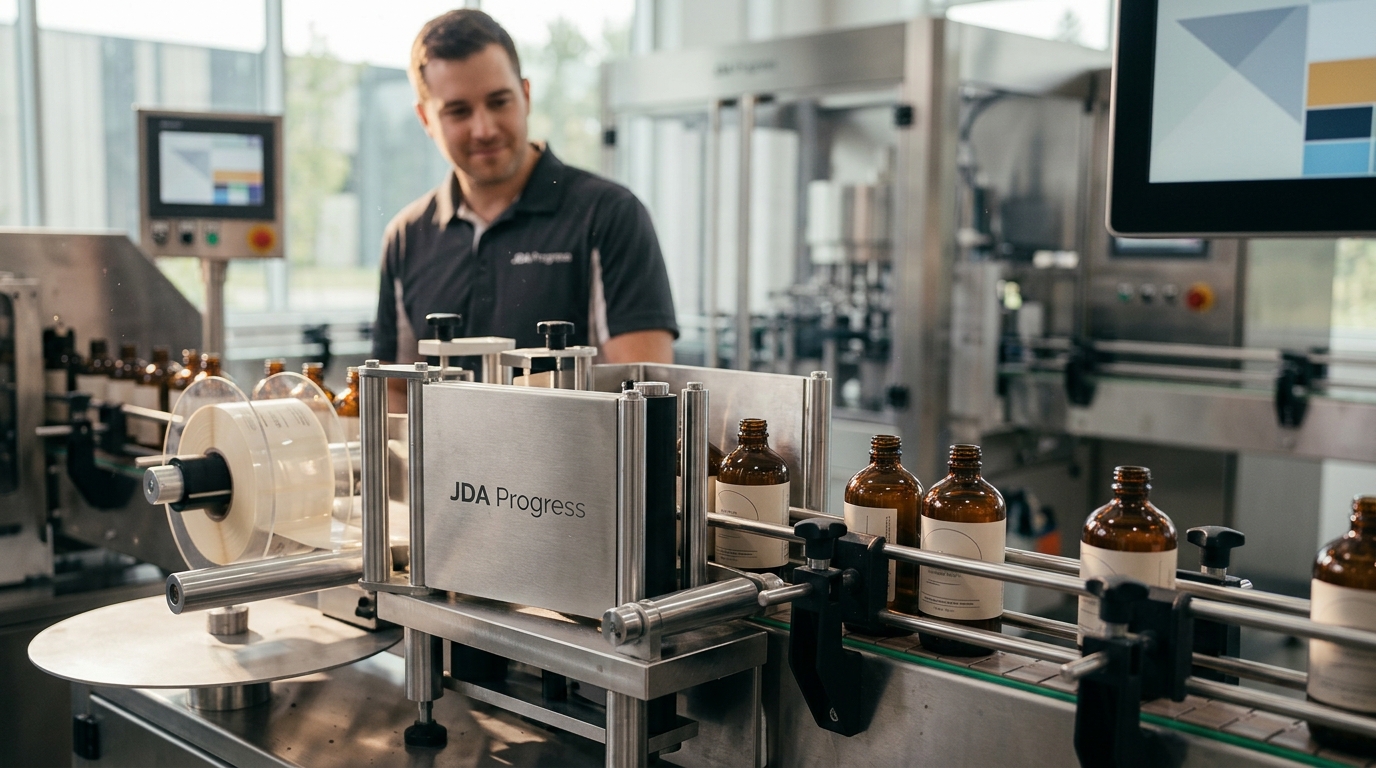
Modern manufacturing facilities require precise application of product identifiers to maintain regulatory compliance and brand consistency. Industry data shows that automated labeling systems reduce manual application errors by approximately forty percent while increasing throughput across high-volume production environments. This operational shift directly impacts overall equipment effectiveness and minimizes costly product recalls. Businesses seeking reliable automation must evaluate mechanical precision, adhesive compatibility, and integration capabilities before committing to capital expenditure. (Trusted Packaging Equipment Manufacturer)
Core Labeling Mechanisms
Pressure-Sensitive Application
Pressure-sensitive labeling is the mechanical adhesion of pre-printed labels to curved substrates using pressure-activated adhesives. Modern rotary labelers utilize precision rollers to eliminate air pockets and ensure uniform contact across cylindrical surfaces. Manufacturers must verify roller tension settings to prevent label wrinkling during high-speed operation.
Hot-Melt Application
Hot-melt labeling is the thermal application of molten adhesive to secure labels under extreme temperature or moisture conditions. Industrial systems maintain precise temperature controls to prevent adhesive degradation or substrate warping. Operators must monitor nozzle clearance to guarantee consistent adhesive coverage across varying bottle diameters.
Production Line Integration
Conveyor Synchronization
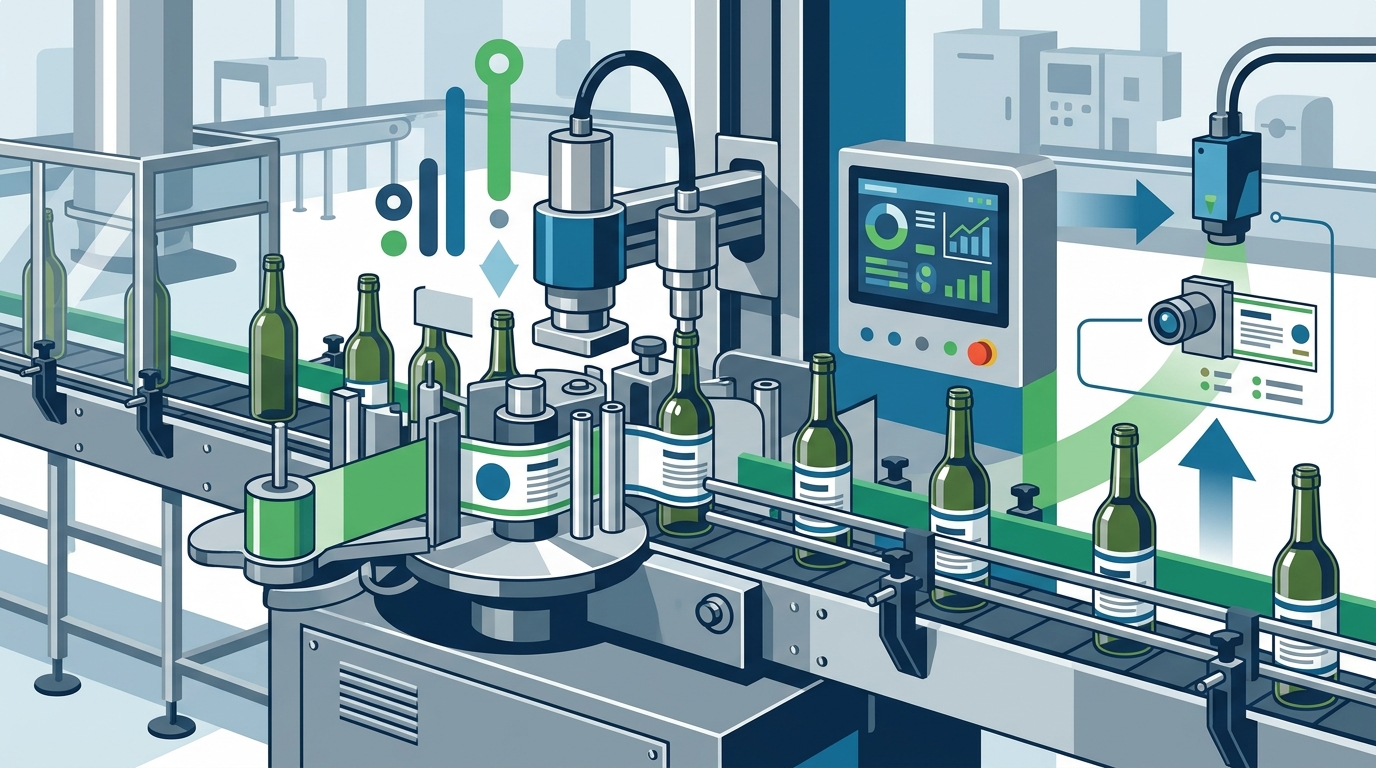
Seamless synchronization between conveying systems and labeling heads prevents product misalignment. Engineers must calibrate encoder feedback loops to match label application points with precise bottle positioning. Labeling modules adapt to existing facility infrastructure without requiring complete line replacement. Facilities can upgrade legacy systems by installing modular components that communicate directly with central control panels.
Bottle Handling Standards
Round bottle handling requires specialized star-wheel guides to maintain consistent orientation. These mechanical components prevent rotational drift during high-speed transit. Automated systems adjust guide spacing dynamically to accommodate varying container diameters. Operators should verify star-wheel tolerances before initiating production runs to prevent mechanical binding or label skew.
Adhesive Technology Standards
Permanent Adhesive Formulations
Permanent adhesives provide long-term bond strength for retail distribution environments. These formulations resist temperature fluctuations and moisture exposure during storage. Packaging engineers must select adhesive chemistries that match substrate porosity and surface energy. Incorrect adhesive selection frequently results in label delamination or residue accumulation on downstream equipment.
Removable Formulation Requirements
Removable adhesives enable temporary labeling applications for promotional campaigns or seasonal inventory. These formulations maintain bond integrity during distribution while allowing clean removal without substrate damage. Quality control teams must verify peel strength specifications to ensure compliance with retail display requirements. Automated systems adjust application pressure to optimize bond performance without compromising label integrity.
Preventive Maintenance Protocols
Roller Calibration Schedules
Regular roller calibration prevents label misregistration and reduces material waste. Maintenance technicians must inspect roller surfaces for adhesive buildup or mechanical wear. Service documentation outlines recommended inspection intervals for continuous operation. Facilities that implement structured calibration schedules experience significantly reduced unplanned downtime across labeling operations.
Sensor Maintenance Procedures
Optical sensors detect label leading edges and trigger application cycles with precise timing. These components require routine cleaning to prevent dust accumulation or optical distortion. Operators must verify sensor alignment during weekly maintenance windows to ensure consistent registration. Automated diagnostic routines flag sensor degradation before production errors occur.
Strategic Procurement Pathways
Vendor Evaluation Criteria
Procurement teams must assess vendor technical support capabilities alongside equipment specifications. Established manufacturers provide extensive documentation covering installation procedures and troubleshooting protocols. Facilities should request live demonstrations to verify machine performance against specific production requirements. Demonstration facilities allow engineers to test custom labeling configurations before finalizing purchase orders.
Total Cost of Ownership Analysis
Total cost of ownership is the complete financial evaluation of equipment acquisition, operational expenses, and long-term maintenance requirements. Automated systems reduce long-term operational costs by minimizing manual intervention and material waste. Financial analysts should project maintenance costs across a five-year operational timeline. Facilities that prioritize reliability over initial purchase price consistently achieve superior return on investment metrics.
Equipment Configuration Comparison
| Configuration Type | Speed Range | Substrate Compatibility | Integration Complexity |
|---|---|---|---|
| Single-Head Rotary | Up to 120 bottles per minute (Tendencies towards bottled) | Standard plastic and glass containers | Low footprint, basic PLC control |
| Multi-Head Inline | Up to 250 bottles per minute | Complex geometries and heavy substrates | High integration, advanced diagnostics |
| Custom Integrated Line | Variable based on line speed | Full range including irregular shapes | Full line synchronization, custom engineering |
Key Takeaways
- Automated labeling systems reduce manual application errors by approximately forty percent while increasing throughput across high-volume production environments.
- Pressure-sensitive labeling remains the dominant method for consumer goods distribution due to its speed and consistency.
- Hot-melt application provides essential bond strength for heavy-duty packaging subjected to extreme environmental conditions.
- Conveyor synchronization requires precise encoder feedback loops to match label application points with exact bottle positioning.
- Regular roller calibration prevents label misregistration and significantly reduces material waste across production shifts.
- Optical sensor maintenance ensures consistent registration and prevents costly production downtime during peak operations.
- Strategic vendor evaluation must prioritize technical support capabilities alongside equipment specifications for long-term success.
Frequently Asked Questions
What diameter range does an automatic round bottle labeling machine support?
Standard industrial labeling systems accommodate container diameters ranging from twenty millimeters to one hundred fifty millimeters. Operators can adjust star-wheel guides and roller tension to accommodate varying container specifications without requiring complete machine reconfiguration.
How does label material thickness affect machine performance?
Label thickness directly influences roller pressure requirements and adhesive application consistency. Thicker substrates demand higher pressure settings to ensure complete adhesion, while thinner materials require precise tension control to prevent wrinkling or tearing during high-speed operation.
Can labeling equipment integrate with existing conveyor systems?
Modern labeling systems feature modular mounting options that adapt to standard conveyor configurations. Engineers can install custom mounting brackets and synchronization modules to ensure seamless integration with existing facility infrastructure without requiring complete line replacement.
What maintenance frequency is recommended for continuous operation?
Facilities operating labeling equipment continuously should schedule preventive maintenance every two hundred operating hours. Routine inspections should verify roller alignment, sensor calibration, and adhesive system functionality to prevent unexpected downtime during peak production cycles.
How are label registration errors corrected during production?
Automated registration correction utilizes optical sensors to detect label leading edges and adjust application timing in real time. Operators can manually override registration settings through the control panel to accommodate specific product requirements or material variations.
What safety protocols must be implemented for labeling equipment?
Facilities must install emergency stop circuits, safety light curtains, and machine guarding to comply with occupational safety regulations. Operators should complete comprehensive safety training before initiating equipment operation to prevent accidental contact with moving mechanical components.
How does label adhesive type impact long-term equipment performance?
Adhesive viscosity and curing properties directly influence roller wear and nozzle maintenance requirements. Facilities must select adhesive formulations that match operational temperature ranges to prevent residue accumulation or mechanical binding during extended production cycles.
Next Steps
Facilities seeking to optimize labeling operations should schedule a technical consultation to evaluate specific production requirements. JDA Progress provides comprehensive engineering support that covers equipment selection, custom integration, and ongoing technical assistance. Contact our team today to request a detailed quotation or schedule a live demonstration at our Vaughan facility.
Request a detailed equipment quotation or explore integrated packaging solutions to verify performance against your specific production parameters.