
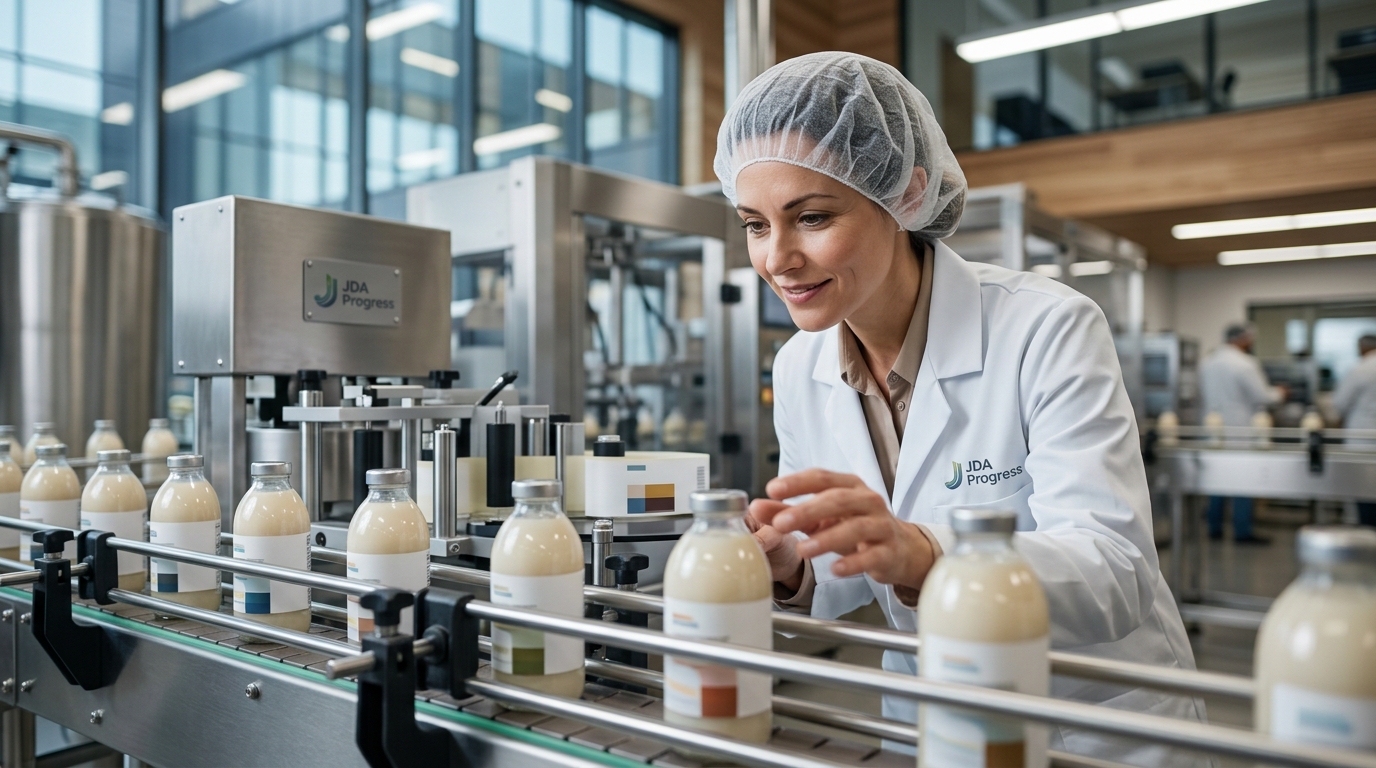
Modern manufacturing facilities require precise application methods to maintain brand consistency across high-volume production runs. According to industry data, automated labeling systems reduce application errors by nearly forty percent while increasing overall throughput across continuous operation cycles. This shift toward mechanized precision directly impacts operational margins and minimizes material waste during peak production windows. Businesses seeking reliable equipment must evaluate mechanical specifications, software integration capabilities, and long-term maintenance requirements before committing to capital expenditures. (About JDA Progress Packaging)
Selection Criteria for Labeling Equipment
Choosing the correct labeling system requires a thorough assessment of container geometry and adhesive chemistry. A label applicator is a mechanical device that precisely positions adhesive-backed graphics onto curved or flat surfaces during high-speed production. Manufacturers must evaluate sensor accuracy, servo motor responsiveness, and changeover mechanisms before finalizing procurement decisions. Facilities handling diverse container diameters benefit from adjustable tracking systems that accommodate rapid product transitions without extended downtime. (Trusted Packaging Equipment Manufacturer)
Integration with existing conveyor infrastructure remains a critical factor for seamless factory floor operations. Many production environments utilize modular bottling lines that require synchronized communication between upstream filling stations and downstream capping units. Our engineering team evaluates spatial constraints, power requirements, and data exchange protocols to ensure complete system compatibility. Clients frequently request custom configurations that align with specific facility layouts and existing automation architectures.
Mechanical Specifications and Integration
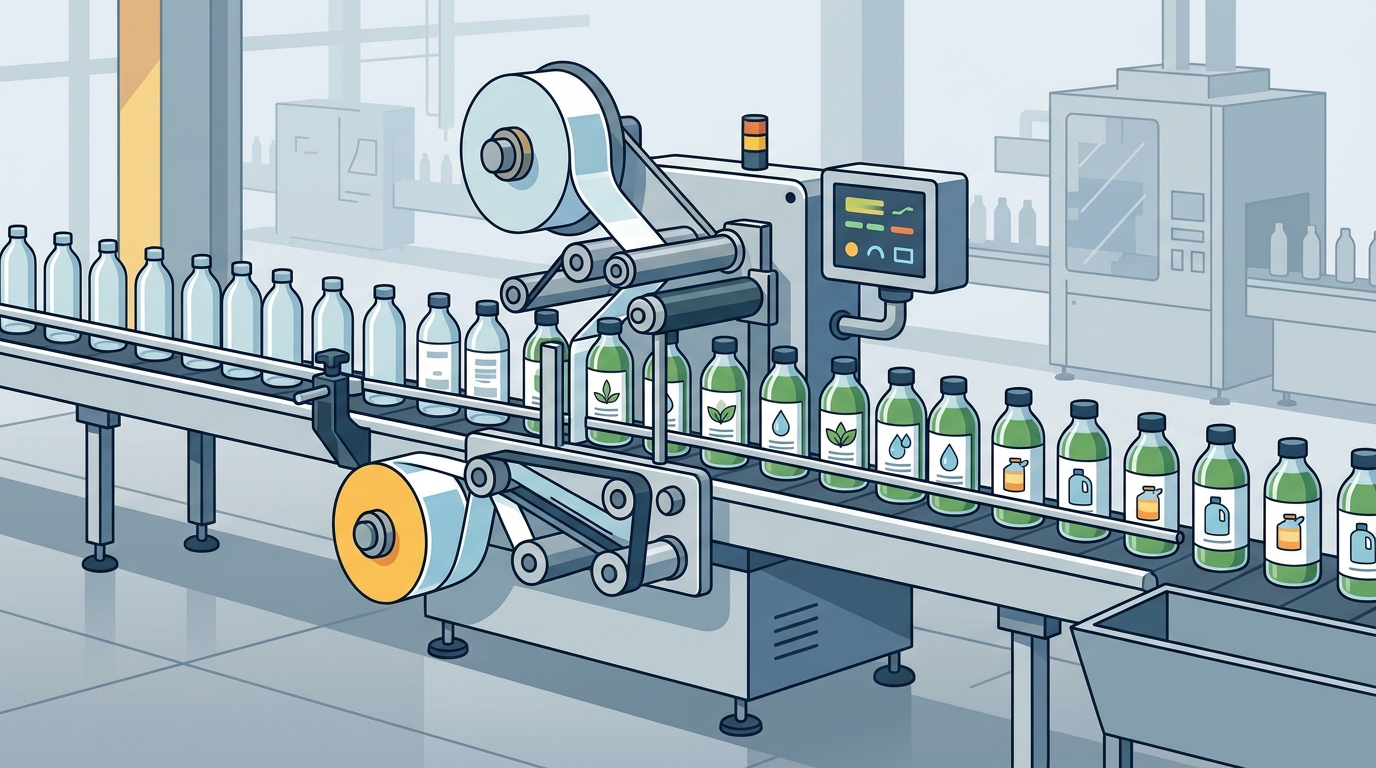
High-performance labeling units utilize advanced servo-driven mechanics to maintain consistent application accuracy across varying production speeds. The labeling mechanism is a precision assembly that controls adhesive placement, tension, and registration during continuous operation. Modern systems incorporate optical sensors that detect container presence and adjust application timing in real time. This responsive architecture prevents misalignment issues that commonly occur with older pneumatic or mechanical drive systems. (Trusted Packaging Equipment Manufacturer)
Adhesive and Substrate Compatibility
Adhesive chemistry must align with container material properties and end-use environmental conditions. Polyolefin labels require specialized pressure-sensitive adhesives that withstand refrigeration cycles or outdoor exposure. Glass containers demand high-tack formulations that prevent label peeling during transit or handling. Our engineering specialists recommend substrate testing protocols to verify adhesive performance before final equipment configuration.
Sensor Technology and Registration
A registration sensor is an optical component that tracks printed marks on label stock during continuous operation. These sensors adjust application timing to maintain precise registration tolerances across varying production speeds. Facilities handling variable label lengths benefit from closed-loop feedback systems that automatically correct positional drift. This technology minimizes material waste and ensures consistent brand presentation across every produced unit.
Operational Efficiency and ROI
Automated labeling systems deliver measurable financial returns through reduced labor requirements and minimized material waste. Data shows that facilities implementing automated labeling solutions experience an average twenty-five percent reduction in operational costs within the first eighteen months of deployment. These efficiency gains stem from consistent application accuracy, reduced changeover times, and lower scrap rates during production cycles. Companies prioritizing long-term profitability evaluate total cost of ownership rather than initial equipment purchase prices.
Changeover procedures directly impact overall equipment effectiveness and daily production capacity. Quick-adjust mounting brackets and tool-less tension controls enable operators to switch between container sizes in under fifteen minutes. This rapid transition capability supports flexible manufacturing strategies that respond to seasonal demand fluctuations. Production managers report higher asset utilization rates when equipment supports diverse product portfolios without extended downtime.
Maintenance Procedures and Support
Preventive maintenance schedules ensure consistent labeling accuracy and extend overall equipment lifespan. Routine inspection protocols include bearing lubrication, sensor calibration, and drive belt tension verification. Our service division provides comprehensive technical support packages that cover remote diagnostics, on-site troubleshooting, and scheduled preventive visits. Clients utilizing our support programs report significantly lower unplanned downtime compared to facilities relying on third-party maintenance contractors.
Remote Diagnostics and Monitoring
Modern labeling systems incorporate network connectivity features that enable remote system monitoring and predictive maintenance alerts. Facility managers receive automated notifications regarding component wear, calibration drift, or operational anomalies before production disruptions occur. This proactive approach minimizes emergency repair costs and maintains consistent output across continuous operation cycles. Our technical support team accesses system logs to diagnose issues and provide immediate configuration adjustments.
Compliance Standards and Documentation
Manufacturing facilities must adhere to strict regulatory requirements regarding food safety, pharmaceutical packaging, and industrial labeling standards. The regulatory framework governs packaging materials that contact consumable products to ensure consumer safety and accurate product identification. Documentation requirements include material safety data sheets, compliance certificates, and traceability records for every production batch. Our engineering team provides complete technical documentation packages to support regulatory audits and quality assurance reviews.
Quality assurance protocols require systematic verification of label placement, adhesive bond strength, and print legibility. Statistical process control charts track application tolerances and identify potential deviations before they impact production output. Facilities implementing rigorous quality management systems maintain higher customer satisfaction rates and reduce warranty claims. Our quality assurance specialists recommend regular calibration schedules to maintain consistent performance across extended operation periods.
Equipment Comparison and Configuration Options
| Configuration Type | Application Speed | Container Compatibility | Integration Requirements |
|---|---|---|---|
| Single Head Rotary | Up to 120 containers per minute | Round bottles 50mm to 150mm diameter | Standard conveyor synchronization |
| Dual Head Inline | Up to 80 containers per minute | Round and oval containers | Advanced servo tracking system |
| Multi-Head Rotary | Up to 200 containers per minute | High-volume production lines | Full bottling line integration |
| Custom Modular | Variable based on configuration (Types of Variables) | Specialty container geometries | Proprietary engineering design |
Key Takeaways
- Automated labeling systems reduce application errors by nearly forty percent across continuous operation cycles.
- Facilities implementing automated labeling solutions experience an average twenty-five percent reduction in operational costs within the first eighteen months.
- Changeover procedures utilizing quick-adjust mounting brackets enable operators to switch between container sizes in under fifteen minutes.
- Our engineering team evaluates spatial constraints, power requirements, and data exchange protocols to ensure complete system compatibility.
- Clients utilizing our support programs report significantly lower unplanned downtime compared to facilities relying on third-party maintenance contractors.
- Modern labeling systems incorporate network connectivity features that enable remote system monitoring and predictive maintenance alerts.
- Our head office is located in the north end of Toronto, Ontario, featuring a 15,000 square foot facility with a permanent showroom.
Frequently Asked Questions
What container diameters does your labeling equipment support?
Our standard labeling systems accommodate container diameters ranging from fifty millimeters to one hundred fifty millimeters. Custom configurations can be engineered to handle specialty geometries or non-standard container profiles. Our engineering team evaluates specific dimensional requirements during the initial consultation phase to ensure optimal equipment selection.
How quickly can operators change over between different container sizes?
Operators can typically transition between container sizes in under fifteen minutes using our quick-adjust mounting brackets and tool-less tension controls. This rapid transition capability supports flexible manufacturing strategies that respond to seasonal demand fluctuations without extended production downtime.
Does your equipment integrate with existing conveyor systems?
Yes, our labeling units feature standard synchronization protocols that communicate seamlessly with upstream filling stations and downstream capping units. Our engineering team evaluates spatial constraints, power requirements, and data exchange protocols to ensure complete system compatibility before final configuration.
What warranty coverage applies to your labeling machinery?
Our standard warranty coverage includes comprehensive parts replacement and technical support for twelve months from the date of installation. Extended service agreements are available to cover preventive maintenance visits, remote diagnostics, and priority technical assistance.
Can your systems handle high-tack adhesives for glass containers?
Absolutely. Our labeling mechanisms are calibrated to handle specialized pressure-sensitive adhesives that withstand refrigeration cycles or outdoor exposure. Our engineering specialists recommend substrate testing protocols to verify adhesive performance before final equipment configuration.
What documentation do you provide for regulatory compliance?
We provide complete technical documentation packages including material safety data sheets, compliance certificates, and traceability records for every production batch. Our engineering team ensures all documentation meets current regulatory requirements to support quality assurance reviews and facility audits.
How does remote monitoring technology improve production uptime?
Modern labeling systems incorporate network connectivity features that enable remote system monitoring and predictive maintenance alerts. Facility managers receive automated notifications regarding component wear, calibration drift, or operational anomalies before production disruptions occur.
Request a Quote
Ready to optimize your production line with precision labeling technology? Our engineering specialists will evaluate your specific container requirements, production volume targets, and facility constraints to design a custom solution. Visit our Demo Centre to witness live machine operations, or contact our sales team directly through our Contact Page to schedule a technical consultation. We look forward to helping you maximize efficiency, minimize costs, and boost your return on investment with reliable packaging equipment.