
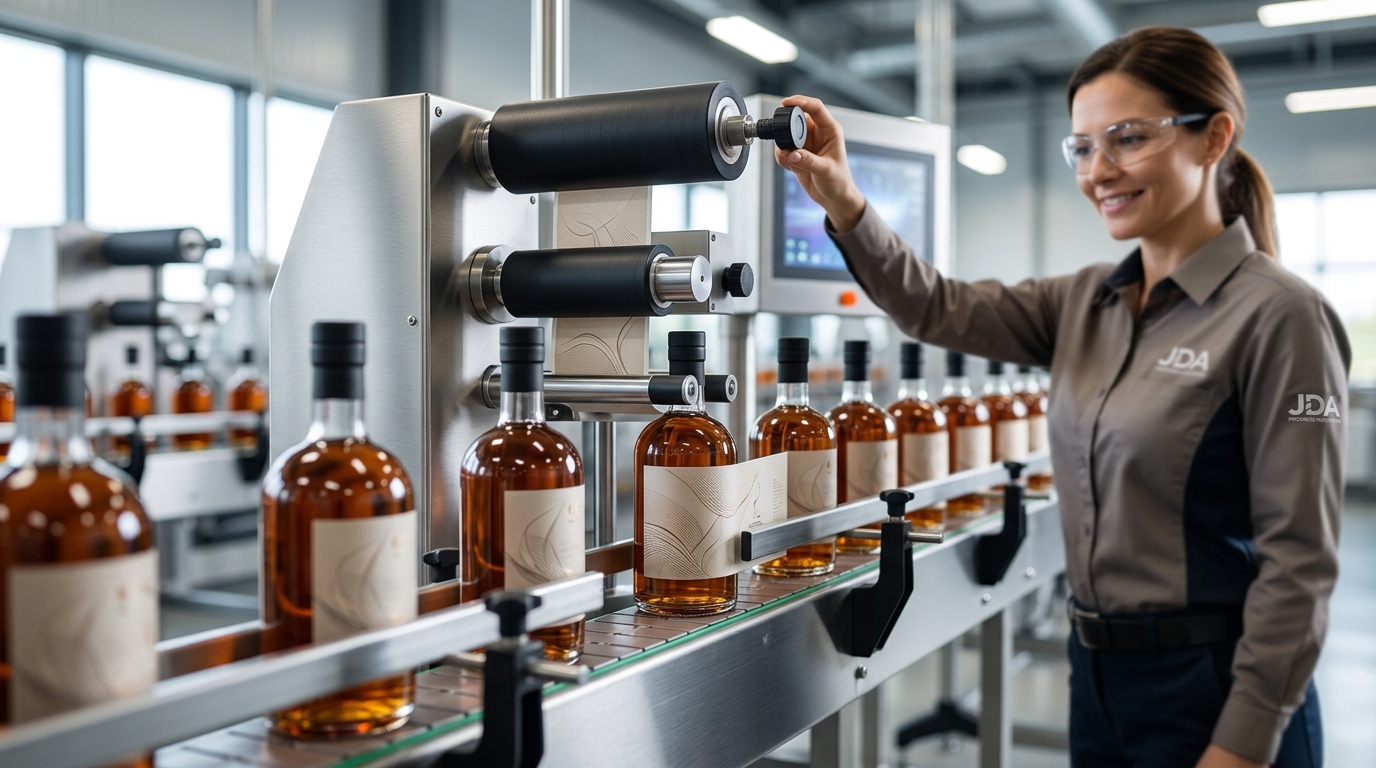
Modern manufacturing facilities require precise application methods to maintain brand consistency across high-volume production runs. Industry data shows that automated labeling systems reduce application errors by nearly forty percent while increasing overall line throughput. Labeling automation has become a non-negotiable standard for food, beverage, and pharmaceutical manufacturers seeking regulatory compliance. This guide examines the engineering principles, mechanical configurations, and integration strategies required to deploy a fully automated round bottle labeling system.
How Automatic Round Bottle Labeling Works
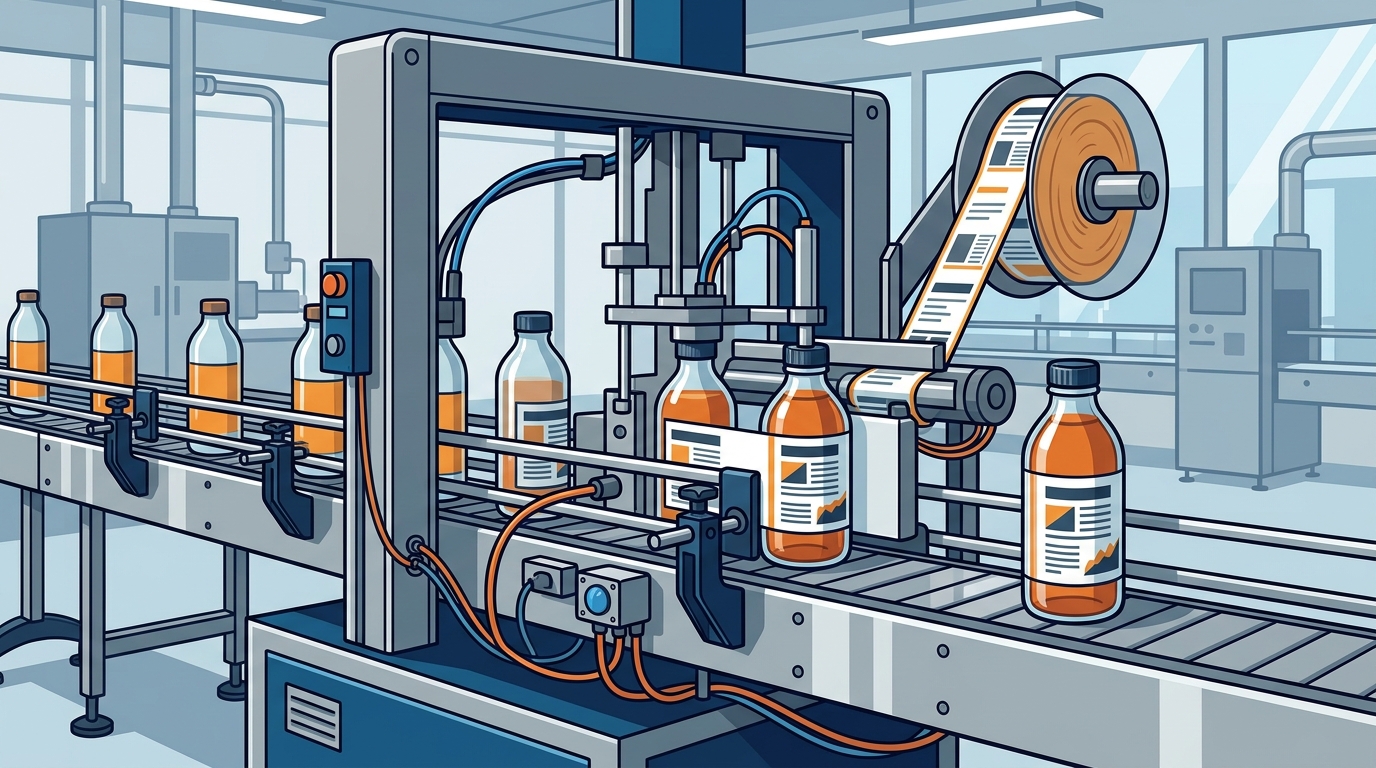
An automatic round bottle labeling machine operates through a synchronized sequence of mechanical and electronic commands. The process begins when a conveyor system transports empty containers into the labeling zone. A rotary indexing table or linear pusher mechanism positions each vessel at a precise angle. A label applicator head then presses the adhesive backing against the curved surface. The system uses optical sensors to detect container presence and adjust timing parameters in real time.
Label application accuracy depends on consistent bottle geometry and stable conveyor speed. Operators must calibrate the applicator gap to match the specific bottle diameter. Proper calibration prevents label skewing and adhesive overflow. The machine records production counts and flags deviations before they impact downstream packaging stages.
Key Components of Modern Labeling Systems
Understanding the core hardware allows facility managers to predict maintenance requirements and optimize changeover times. A standard labeling unit contains a label feed mechanism, a cutting blade or tear-off bar, and a pressure applicator head. The feed mechanism pulls labels from a roll or stack and advances them to the application point. A cutting blade trims the label to the exact required length. The pressure head applies controlled force to ensure adhesion without damaging the container.
Label application technology varies based on container material and label type. A wrap-around labeler is a mechanical device that applies adhesive labels to cylindrical containers by rotating the bottle against a stationary applicator pad. A wipe-on labeler is a pneumatic or mechanical system that presses labels onto containers using a soft brush or rubber blade. A blow-on labeler is a compressed air system that floats labels onto containers before pressing them into place.
Manufacturers integrate variable frequency drives to adjust conveyor speeds without mechanical adjustments. These drives synchronize the label feed rate with the bottle travel speed. Operators can swap applicator heads in under fifteen minutes to accommodate different label sizes. Labeler configurations support both pressure-sensitive and shrink sleeve applications.
Integration with Filling and Capping Lines
Labeling equipment rarely operates in isolation. Modern production facilities route containers through a continuous bottling line that combines filling, capping, and labeling stages. The labeling station must accept containers from a filler and pass them to a capping module without creating bottlenecks. Buffer conveyors store excess containers during label roll changes or minor jams.
Integration requires precise timing between upstream and downstream machinery. A bottle unscrambler is a mechanical device that orients randomly stacked containers into a single-file line for processing. Unscrambling mechanisms ensure consistent spacing before the labeling head engages. The control system communicates with the filler and capper via programmable logic controllers to adjust line speeds dynamically.
Facility engineers must account for label adhesive curing times when designing line layouts. Hot melt adhesives require cooling zones to set properly before capping. Cold glue systems need extended conveyor distances to allow penetration into the label backing. Complete bottling lines incorporate these timing variables into the master production schedule.
Maintenance Protocols and Operational Efficiency
Preventive maintenance extends equipment lifespan and reduces unplanned downtime. Operators should inspect label feed rollers weekly to remove adhesive residue and paper dust. The applicator head bearings require lubrication according to the manufacturer schedule. Regular bearing inspection prevents label misalignment and mechanical wear. Control panels need periodic cleaning to prevent dust accumulation on circuit boards.
Manufacturers provide diagnostic software that tracks motor hours and flags component wear. Operators can schedule part replacements during planned downtime rather than reacting to failures. Replacement kits include applicator pads, drive belts, and sensor lenses. Service and parts support ensures rapid component replacement when required.
Facility managers should maintain a log of label roll specifications and adhesive types. Different adhesives require different applicator temperatures and pressure settings. Standardizing label suppliers reduces calibration variables and improves line consistency. Engineering teams assist clients in selecting compatible label materials for specific product environments.
Selecting the Right Labeler for Your Production Volume
Production volume dictates the mechanical complexity and automation level required. Low-volume operations benefit from semi-automatic tabletop units that require manual bottle placement. Medium-volume facilities require rotary labelers that process multiple containers simultaneously. High-volume manufacturers need continuous motion labelers with servo-driven feed mechanisms.
Labeler selection depends on container diameter, label width, and required output rates. A rotary labeler processes containers on a rotating carousel with multiple applicator heads. A continuous motion labeler applies labels while the bottle moves at constant speed without stopping. Capping integration determines whether the labeling station requires a dedicated buffer zone.
Facility planners must calculate the total cost of ownership rather than focusing solely on initial purchase price. Energy consumption, label waste, and changeover times directly impact profitability. Demonstration facilities allow operators to test label rolls and container types before committing to a purchase.
| Labeling Technology | Best Application Scenario | Speed Range (BPH) | Changeover Complexity |
|---|---|---|---|
| Wrap-Around Labeler | Standard cylindrical containers with full or partial labels | 30 to 60 | Low |
| Wipe-On Labeler | Pressure-sensitive labels requiring firm adhesion | 40 to 80 | Medium |
| Blow-On Labeler | Lightweight labels or irregular container surfaces | 50 to 100 | Medium |
| Rotary Labeler | High-volume production with multiple applicator heads | 100 to 300 | High |
| Continuous Motion Labeler | Maximum throughput with servo-driven precision | 200 to 500 | High |
Key Takeaways
- Automated labeling systems reduce application errors by nearly forty percent while increasing throughput.
- Label application accuracy depends on consistent bottle geometry and stable conveyor speed.
- Variable frequency drives synchronize label feed rates with bottle travel speeds.
- Preventive maintenance includes weekly roller inspections and monthly bearing lubrication.
- High-volume facilities require continuous motion labelers with servo-driven mechanisms.
- Label adhesive curing times dictate conveyor distances and line layout design.
- Total cost of ownership calculations must factor in energy consumption and changeover times.
Frequently Asked Questions
What container diameters can an automatic round bottle labeling machine handle?
Most industrial labeling machines accommodate containers ranging from twenty millimeters to one hundred fifty millimeters in diameter. Operators adjust the applicator gap and conveyor guides to match specific bottle sizes. Quick-change tooling kits allow production teams to switch between sizes without specialized tools.
How does label adhesive type affect machine selection?
Adhesive chemistry determines the required application temperature and pressure settings. Hot melt adhesives require heated applicator heads and cooling conveyor zones. Cold glue systems need extended dwell times to allow penetration. Polypropylene labels require different pressure settings than paper-based labels.
Can labeling equipment integrate with existing filling machinery?
Modern labeling systems communicate with upstream and downstream equipment via programmable logic controllers. Standard communication protocols allow seamless data exchange between machines. Engineering consultants design custom integration plans for legacy equipment upgrades.
What is the typical changeover time for switching label sizes?
Standard changeover procedures require fifteen to thirty minutes depending on the machine configuration. Quick-release applicator heads and tool-less conveyor adjustments reduce downtime. Operators receive detailed changeover checklists during initial training sessions.
How do optical sensors improve labeling accuracy?
Optical sensors detect label registration marks and container presence in real time. The control system adjusts the feed mechanism to compensate for minor label printing variations. Sensor calibration ensures consistent label placement across production batches. Operators can adjust sensitivity thresholds to match label stock quality.
What warranty coverage typically applies to industrial labeling equipment?
Manufacturers provide standard warranty periods ranging from one to three years on mechanical components. Extended warranty packages cover electronic controls and specialized applicator heads. Technical support teams assist with warranty claims and provide replacement parts.
Next Steps for Production Optimization
Upgrading to an automatic round bottle labeling machine requires careful planning and technical validation. Facility managers should request a comprehensive line audit to identify current bottlenecks and integration points. Request a quote to schedule a technical consultation with packaging engineers. Production teams can test label rolls and container samples at the demonstration center before finalizing equipment specifications.