
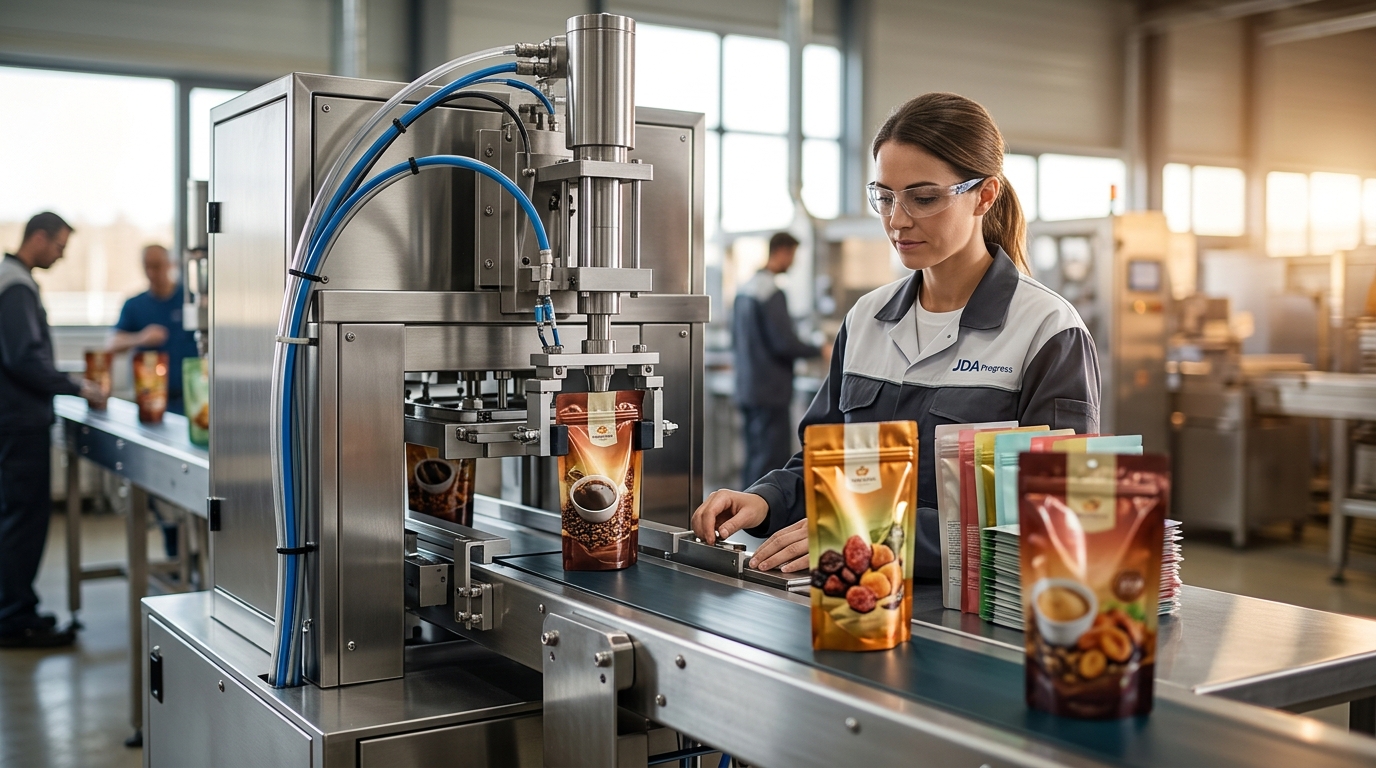
The global demand for flexible packaging continues to accelerate, with industry reports indicating that the flexible packaging market will exceed 140 billion dollars by 2027. Market data shows that standup pouches dominate this segment due to their shelf presence and material efficiency. Manufacturers must select equipment that handles complex pouch geometries without compromising fill accuracy. This guide examines the optimal automatic filling machine configurations for premade standup doy pouches. We will analyze mechanical specifications, throughput requirements, and integration protocols to help you maximize operational efficiency.
Understanding Premade Standup Pouch Requirements
Premade standup doy pouches require specialized handling mechanisms. Regulatory guidelines state that food contact surfaces must maintain strict sanitary standards. The pouch structure typically features a gusseted bottom and a flat front panel. This geometry demands precise gripping and positioning systems. Automatic filling machines must accommodate varying film thicknesses and seal integrity thresholds. Equipment failure during the loading phase causes costly downtime and material waste.
Primary Filling Technologies for Doy Pouches
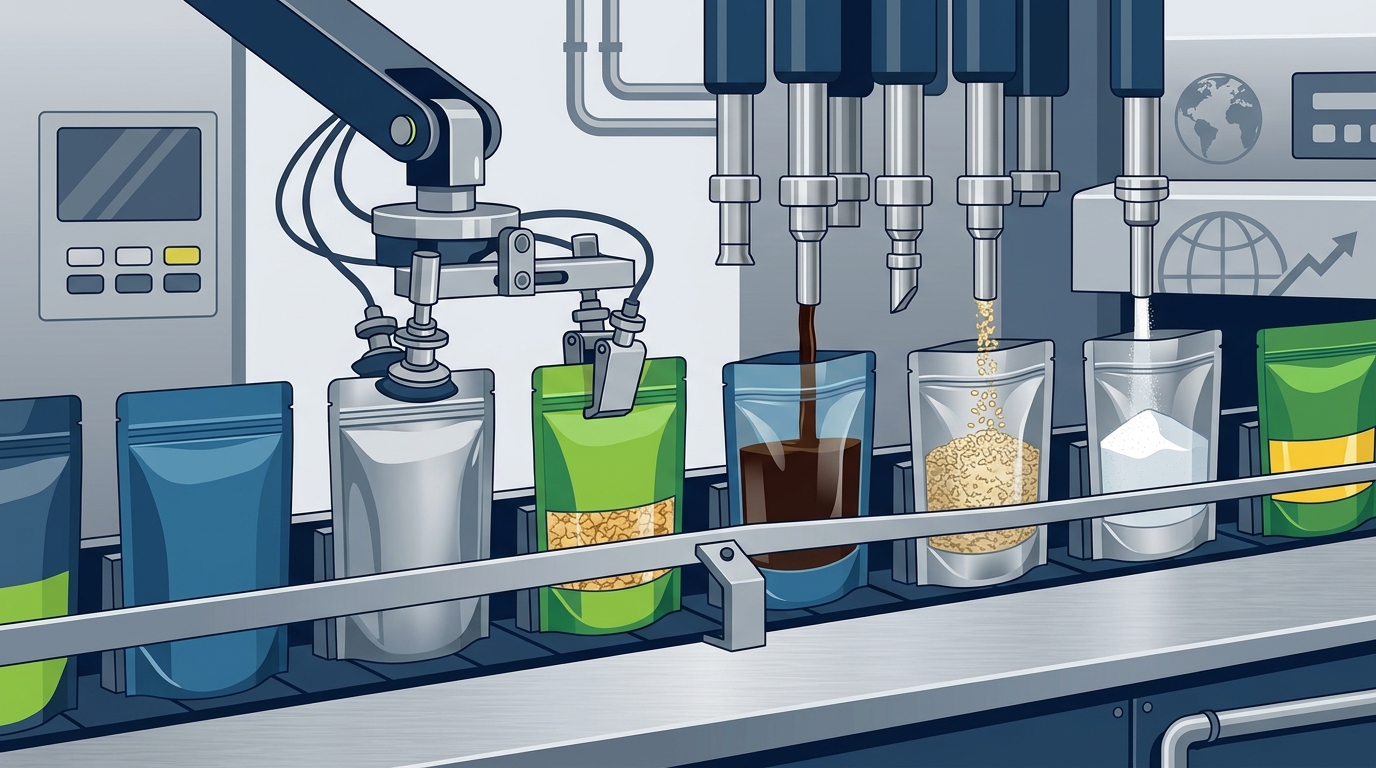
The optimal filling technology depends entirely on product viscosity. Liquid products require piston or peristaltic pump systems. Powder formulations benefit from volumetric cup or auger filler configurations. Granular materials often utilize multi-head weigh filler assemblies. Industry benchmarks confirm that automated weighing systems reduce product giveaway by nearly eight percent. JDA Progress manufactures specialized fillers designed for these exact material classifications. Explore our liquid and powder filling solutions to match your specific formulation requirements.
Critical Machine Specifications and Speed Metrics
High-speed production lines demand robust mechanical engineering. Standard automated pouch fillers operate between 30 and 120 pouches per minute. The selection depends on your target output and labor constraints. Machine frames typically utilize stainless steel construction to resist corrosion. Compliance documentation requires full material traceability and clean-in-place capabilities. You must verify the maximum pouch height and width tolerances before purchasing. Equipment that exceeds your dimensional limits will cause frequent jams and misfeeds.
Integration with Sealing and Labeling Systems
Standup pouches require immediate heat sealing after filling. The filling station must synchronize with a vertical form fill sealer or a standalone sealing unit. Labeling stations apply batch codes and barcodes directly onto the pouch surface. Production efficiency reports indicate that integrated labeling reduces secondary handling by forty percent. JDA Progress offers comprehensive bottling line configurations that combine these functions. Review our complete automated bottling line packages for seamless production workflows.
Operational Efficiency and Maintenance Considerations
Routine maintenance schedules directly impact long-term profitability. Automated systems feature modular components that simplify replacement procedures. Operators should verify spare parts availability before finalizing equipment purchases. Quality assurance protocols mandate regular calibration checks and sensor verification. JDA Progress maintains a dedicated service division to support ongoing operations. Access our comprehensive service and parts catalog to minimize unexpected downtime.
Key Takeaways
- Standup pouches require specialized gripping and positioning mechanisms.
- Liquid formulations perform best with piston or peristaltic pump systems.
- Powder and granular products benefit from volumetric or multi-head weigh fillers.
- High-speed automated systems typically process 30 to 120 pouches per minute.
- Integrated sealing and labeling stations reduce secondary handling operations.
- Stainless steel construction ensures compliance with food safety regulations.
- JDA Progress has manufactured packaging equipment since 1988.
Frequently Asked Questions
What defines a premade standup doy pouch?
A premade standup doy pouch is a pre-manufactured flexible container featuring a gusseted bottom that allows the package to stand independently on retail shelves.
Which filling technology handles high-viscosity products?
Piston filling machines are automated systems that draw precise volumes of thick liquids, pastes, or adhesives into the pouch opening.
How does an automated weigh filler improve accuracy?
An automated weigh filler is a precision device that continuously measures product weight during the filling cycle and adjusts the discharge rate in real time.
What speed range should I expect from automated pouch fillers?
Automated pouch fillers typically operate between 30 and 120 pouches per minute, depending on the specific machine configuration and product characteristics.
Why is stainless steel construction required for food packaging?
Stainless steel construction is required for food packaging because it provides corrosion resistance, prevents bacterial accumulation, and meets strict sanitary compliance standards.
How do I integrate a filling machine with a labeling station?
You integrate a filling machine with a labeling station by synchronizing the conveyor timing and using a programmable logic controller to coordinate both operations.
What maintenance schedule applies to automated filling equipment?
Automated filling equipment requires weekly sensor calibration, monthly lubrication checks, and quarterly seal bar inspections to maintain optimal performance.
Request Your Custom Packaging Solution
Selecting the correct automatic filling machine requires precise technical alignment with your production goals. JDA Progress designs and manufactures high-quality packaging equipment to help you maximize efficiency, minimize cost, and boost your ROI. Visit our demonstration center in Vaughan, Ontario to test equipment with your actual product. Contact our engineering team today to schedule a technical consultation. Request a quote through our official contact portal and receive a customized equipment proposal within forty-eight hours.
| Filling Technology | Compatible Product Types | Target Throughput | Recommended Integration |
|---|---|---|---|
| Piston Filler | Liquids, pastes, adhesives | 30 to 60 pouches per minute | Liquid filling systems |
| Volumetric Cup Filler | Powders, granules, spices | 40 to 80 pouches per minute | Powder filling solutions |
| Multi-Head Weigh Filler | Snacks, nuts, confectionery | 60 to 120 pouches per minute | Automated bottling lines |
| Auger Filler | Fine powders, coffee, flour | 20 to 50 pouches per minute | Precision powder fillers |