
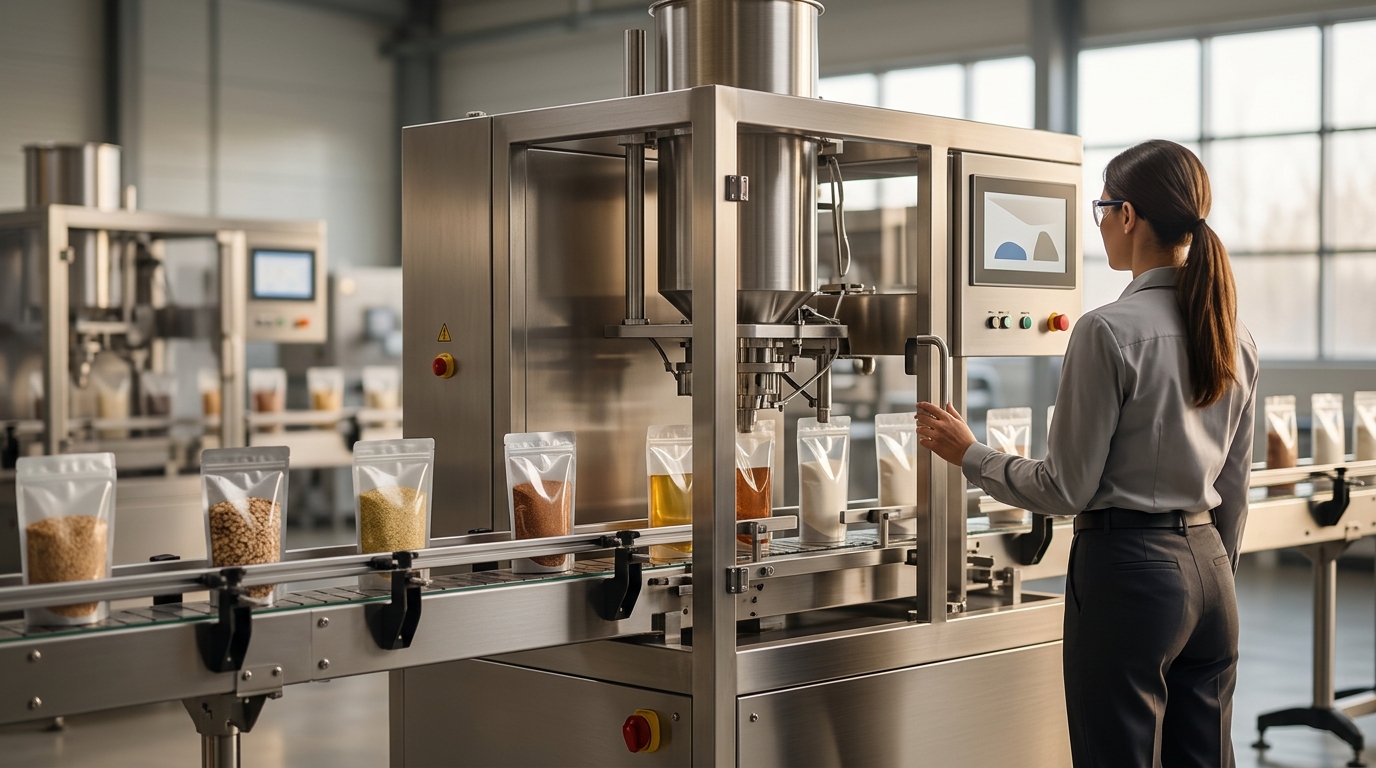
Modern flexible packaging operations require precise volumetric control to maintain product consistency and minimize waste. According to industry data, automated filling systems reduce product giveaway by approximately eighteen percent while increasing line throughput across high-speed manufacturing environments. Facilities that integrate specialized pouch filling technology consistently report higher operational margins and fewer manual handling errors. Selecting the correct equipment requires a clear understanding of your specific product viscosity, pouch dimensions, and target production rates. This guide examines the technical specifications and operational advantages of modern filling solutions to help you make an informed capital investment decision.
Understanding Premade Standup Pouch Filling Requirements
A premade standup pouch is a pre-formed flexible container with a gusseted bottom that stands upright on retail shelves. These containers dominate the consumer goods sector because they offer superior shelf presence and material efficiency compared to rigid alternatives. Manufacturers must account for pouch thickness, seal integrity, and product density when configuring filling equipment. The filling mechanism must handle delicate film materials without causing wrinkles or seal breaches. Material compatibility remains the primary engineering constraint for any high-speed packaging line.
Product viscosity directly dictates the mechanical approach. Liquid products require piston or gravity-fed dispensing systems. Powders and granular materials demand auger or volumetric cup dispensers. Your specific formulation will determine whether a volumetric or gravimetric system delivers the necessary accuracy. Consulting your fillers catalog provides detailed specifications for each mechanical configuration.
Evaluating Filling Technologies for Flexible Packaging
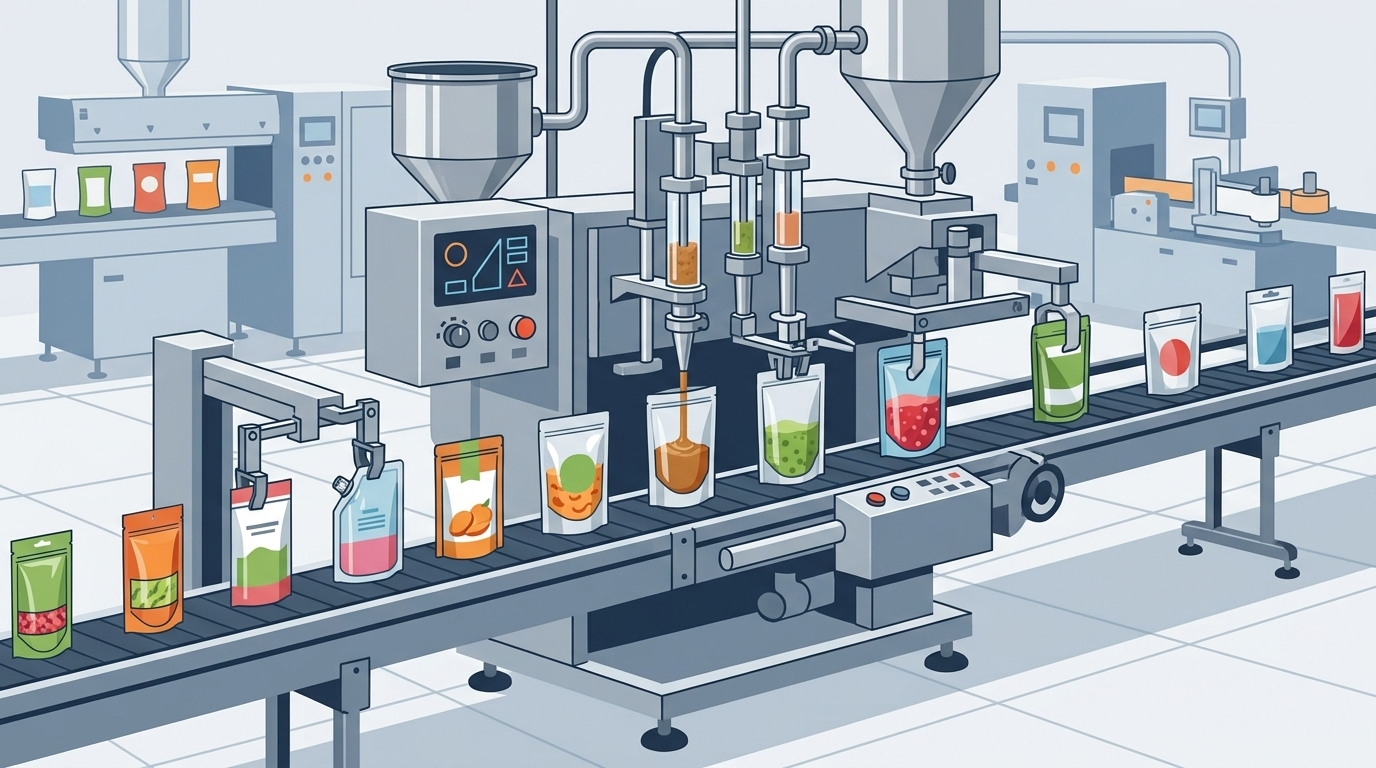
An automatic filling machine is a mechanized system that dispenses precise product volumes into containers without manual intervention. The industry currently utilizes three primary mechanical approaches for standup pouch applications. Piston fillers deliver exceptional accuracy for viscous liquids and pastes. Auger fillers handle dry powders and granular materials with minimal dust generation. Volumetric cup fillers provide cost-effective solutions for free-flowing materials.
Each technology offers distinct advantages depending on your production volume and product characteristics. Piston systems maintain consistent fill weights across thousands of cycles when properly calibrated. Auger mechanisms prevent cross-contamination between product batches through quick-change tooling. Volumetric cups operate at higher cycle rates but require frequent recalibration when material density shifts. Review our baggers documentation to understand how filling stations integrate with vertical form fill seal operations.
Critical Operational Parameters for High-Volume Production
Factory acceptance testing is a comprehensive validation process conducted at the manufacturing facility to verify equipment performance before shipment. Production managers must evaluate cycle speed, fill accuracy, and changeover time before committing to a capital purchase. High-speed lines typically operate between two hundred and six hundred pouches per minute. Slower specialty lines prioritize precision over raw throughput.
Changeover procedures significantly impact overall equipment effectiveness. Quick-release tooling and programmable logic controllers reduce downtime between product runs. Operators should verify that your maintenance team can perform routine calibration without specialized engineering support. Our bottling lines integration guides outline standard operating procedures for seamless line synchronization.
Integrating Sealing and Capping Systems
Seal integrity determines the commercial viability of any flexible packaging operation. Heat sealing parameters must match the specific resin composition of your pouch material. Inconsistent sealing temperatures create weak points that compromise product shelf life. Modern filling stations incorporate automated seal verification sensors to reject defective units before they enter secondary packaging.
Capping mechanisms must align perfectly with the filling nozzle to prevent product spillage during transfer. Torque-controlled capping heads ensure consistent closure pressure across varying container geometries. Facilities that invest in synchronized sealing and capping modules report fewer warranty claims and reduced material waste. Explore our cappers product range to identify compatible closure technologies for your specific pouch format.
Maintenance Protocols and Equipment Lifespan
Preventive maintenance schedules directly influence long-term return on investment. Manufacturers that adhere to strict lubrication and calibration routines typically extend equipment lifespan by three to five years. Daily cleaning procedures prevent product buildup that interferes with mechanical tolerances. Quarterly performance audits identify wear patterns before they cause unplanned line stoppages.
Documentation and technical support availability remain critical factors when selecting a supplier. Reputable manufacturers provide comprehensive training programs and readily available replacement parts. Our about page details our thirty-five year commitment to supporting North American packaging operations. Contact our engineering team to schedule a facility assessment and request a customized equipment proposal.
Comparing Filling Machine Technologies
| Filling Technology | Optimal Product Type | Target Cycle Speed | Maintenance Frequency |
|---|---|---|---|
| Piston Filler | Liquids, pastes, creams | 120 to 240 pouches per minute | Weekly seal inspection |
| Auger Filler | Powders, granules, spices | 150 to 300 pouches per minute | Monthly screw calibration |
| Volumetric Cup Filler | Free-flowing solids | 300 to 600 pouches per minute | Bi-weekly cup replacement |
Key Takeaways
- JDA Progress has operated as a family-owned enterprise since 1988, delivering thousands of packaging machines across North America and international markets.
- The company maintains a 15,000 square foot demonstration facility in Vaughan, Ontario, featuring a permanent public showroom for live equipment testing.
- Automated filling systems consistently reduce product giveaway by approximately eighteen percent while increasing line throughput across high-speed manufacturing environments.
- Premade standup pouches require specialized handling mechanisms to prevent film wrinkles and seal breaches during high-cycle production runs.
- Factory acceptance testing validates equipment performance before shipment, ensuring seamless integration into existing production workflows.
- Preventive maintenance schedules directly influence long-term return on investment, with properly calibrated systems extending operational lifespan by three to five years.
Frequently Asked Questions
What is the standard warranty period for industrial filling equipment?
Most reputable manufacturers provide a twelve to twenty-four month warranty covering mechanical components and control systems. Extended service agreements are available to cover labor and replacement parts beyond the initial coverage window.
Can existing packaging lines accommodate new automatic filling stations?
Modern filling systems feature modular architectures that integrate with legacy conveyors and secondary packaging equipment. Engineering assessments determine compatibility and recommend necessary interface modifications.
How frequently should filling nozzles be replaced?
Nozzle replacement schedules depend entirely on product abrasiveness and daily operating hours. Highly abrasive formulations may require quarterly changes, while gentle liquids typically allow annual replacements.
What documentation is required for regulatory compliance?
Food and beverage operations must maintain detailed calibration records and material safety certifications. Our equipment meets regulatory standards for direct food contact components.
Is operator training included with equipment delivery?
Comprehensive training programs cover daily operation, routine maintenance, and emergency troubleshooting procedures. Our technicians provide on-site instruction during the factory acceptance testing phase.
How do I calculate the total cost of ownership?
Total cost calculations factor in initial capital expenditure, energy consumption, replacement parts, and projected labor savings. Automated systems typically achieve break-even within eighteen to thirty-six months.
What changes occur when switching between different product viscosities?
Viscosity adjustments require nozzle recalibration and pump pressure modifications. Quick-change tooling kits minimize downtime during product transitions.
Ready to Optimize Your Packaging Line?
Contact our engineering team today to schedule a facility assessment and request a customized equipment proposal. Visit our main website to explore our complete catalog of packaging solutions and connect with a regional sales representative.