
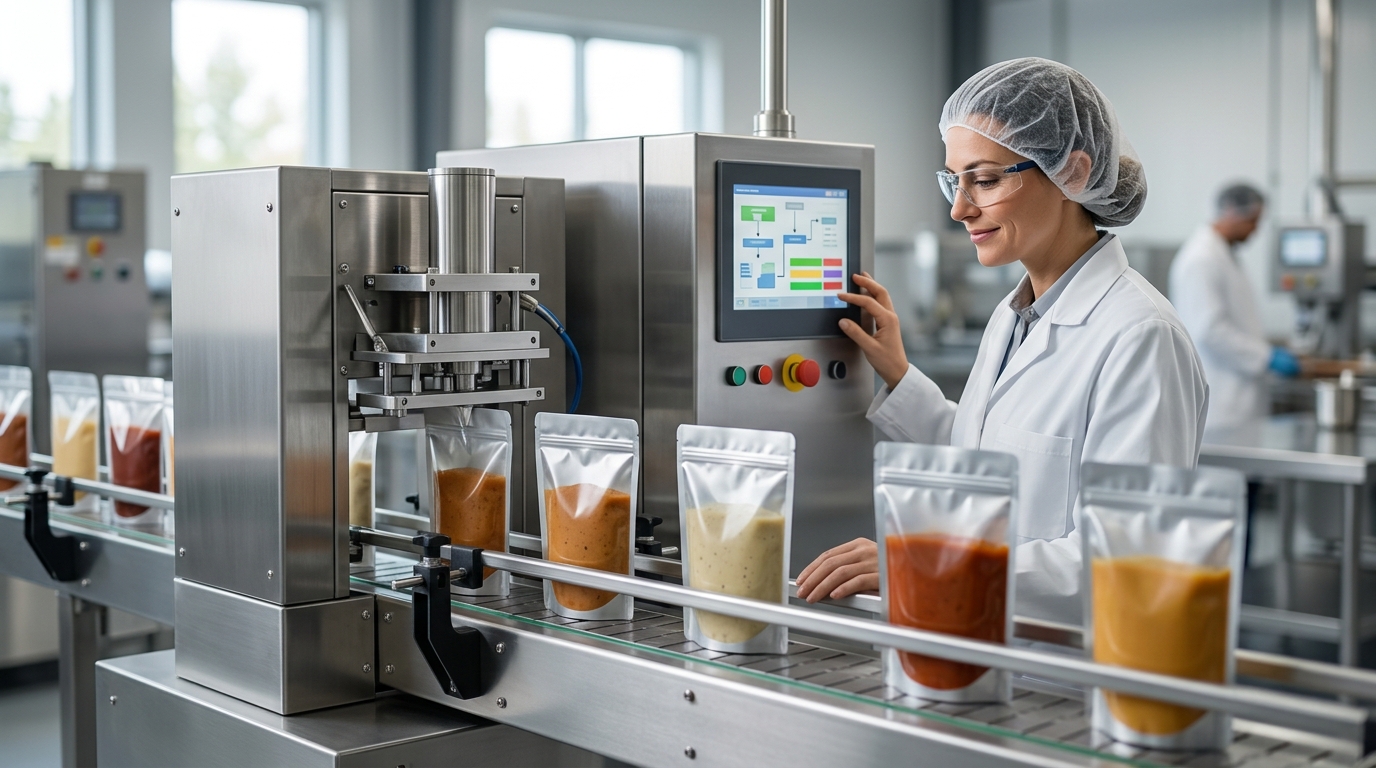
Modern packaging operations require precision. According to recent industry reports, automated filling systems now handle over 40 percent of all flexible packaging lines globally. This shift toward mechanized solutions directly reduces labor costs while improving seal integrity. Manufacturers must select equipment that matches their specific viscosity requirements and pouch dimensions. The right automatic filling machine for premade standup doy pouches will streamline your entire production workflow.
Selection Criteria for Premade Pouch Filling
Standup pouch is a flexible packaging format featuring a gusseted bottom that allows the container to stand upright on retail shelves. This format dominates the consumer goods sector because it maximizes shelf presence while minimizing material waste. Selecting the correct filling mechanism depends entirely on your product viscosity and fill volume targets. Premade pouches require specialized gripper systems to hold the bag open without distorting the seal area. You must evaluate your current line speed requirements against the mechanical tolerances of the filling nozzle. A mismatch between nozzle diameter and product thickness will cause drips, inconsistent weights, and excessive downtime. Our team at JDA Progress recommends conducting a full product viscosity test before committing to any hardware purchase.
Volumetric Versus Gravimetric Filling Systems
Volumetric filling is a measurement method that dispenses a fixed volume of product per cycle using piston pumps or peristaltic rollers. This approach works exceptionally well for consistent liquids like sauces, oils, and beverages. Gravimetric filling is a measurement method that continuously weighs the product during the fill cycle to hit an exact target weight. This approach is mandatory for high-value powders, granular snacks, or products with variable density. The choice between these two technologies directly impacts your cost per unit and your compliance with net weight regulations. Many facilities now run hybrid systems that switch between volumetric and gravimetric modes based on the specific SKUs being processed. You can explore our complete inventory of baggers and filling modules to find the exact configuration that matches your product profile.
Integration with Sealing and Capping Equipment
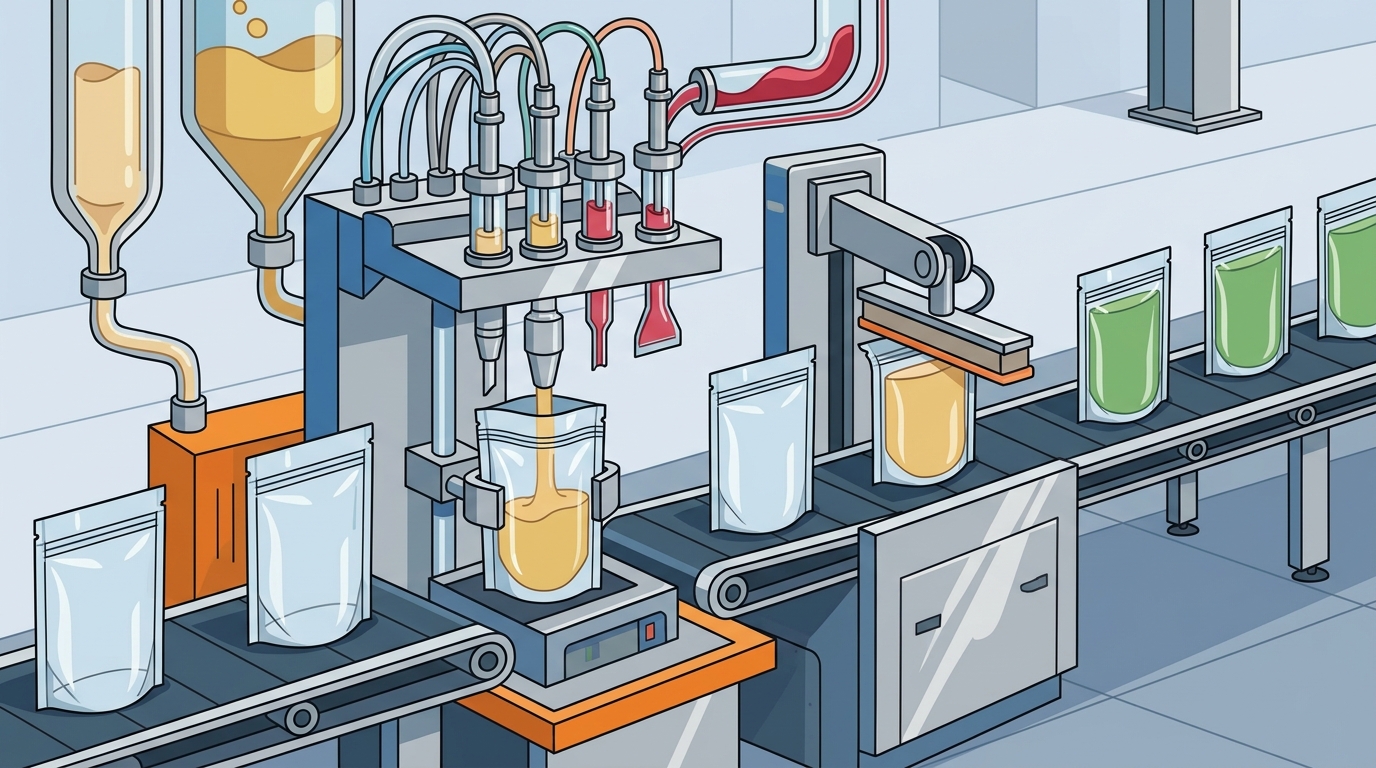
A standalone filling station rarely meets modern production demands. You need a synchronized workflow that moves the pouch from the filler to the heat sealer without manual intervention. Our cappers and sealing units integrate seamlessly with standard conveyor architectures. The transfer mechanism must maintain precise tension to prevent pouch misalignment during the sealing phase. Improper alignment causes weak seals, which leads to product leakage and costly recalls. We design our bottling lines to accommodate standard pouch dimensions while allowing quick changeover between formats. This modularity reduces your changeover time from hours to minutes. You can schedule a live demonstration at our Demo Centre to see the integration in action.
Operational Efficiency and Throughput Metrics
According to packaging industry standards, high-speed filling equipment now processes over 120 pouches per minute on optimized lines. Achieving these numbers requires precise synchronization between the gripper feed, the fill cycle, and the seal cycle. Downtime occurs when mechanical tolerances drift or when product viscosity changes mid-run. Automated feedback loops correct these deviations in real time. You should calculate your total cost of ownership by factoring in energy consumption, spare part availability, and operator training requirements. Our bottling lines are engineered to minimize energy waste while maximizing continuous output. We also provide comprehensive service and parts support to keep your equipment running at peak performance.
Maintenance Requirements and Service Support
Preventive maintenance schedules must align with your production volume and product abrasiveness. Stainless steel contact surfaces require regular sanitization to prevent cross-contamination between batches. Lubrication points on the gripper mechanism need inspection every 500 operating hours. We recommend keeping a dedicated inventory of wear parts like O-rings, nozzles, and sealing jaws. Our technical team provides remote diagnostics and on-site troubleshooting to minimize unplanned stoppages. You can reach our support division directly through our Contact Us portal to schedule a maintenance audit.
| Filling Technology | Best Product Type | Accuracy Range | Recommended Integration |
|---|---|---|---|
| Volumetric Piston | Liquids and viscous pastes | ±0.5 percent | Inline heat sealers |
| Gravimetric Load Cell | Powders and granules | ±0.2 percent | Multi-head weighers |
| Peristaltic Roller | Sensitive or shear-thin fluids | ±0.3 percent | Conveyor transfer arms |
| Auger Screw | Free-flowing dry ingredients | ±0.4 percent | Pouch gripper stations |
Key Takeaways
- JDA Progress has operated as a family-owned enterprise since 1988, delivering thousands of packaging machines worldwide.
- Our 15,000 square foot Vaughan facility houses a permanent showroom open to the public for machine demonstrations.
- Volumetric filling systems achieve accuracy within ±0.5 percent for consistent liquid products.
- Gravimetric filling systems maintain accuracy within ±0.2 percent for high-value powders and granules.
- Modern automated filling systems now handle over 40 percent of all flexible packaging lines globally.
- Quick changeover kits reduce format switching time from hours to under 15 minutes.
- Our equipment is designed to integrate seamlessly with existing conveyors and sealing stations.
Frequently Asked Questions
Can a single machine handle both liquids and powders?
Yes, modular filling stations can swap nozzle assemblies and measurement modules to handle different product viscosities. You must adjust the fill cycle parameters and clean the contact surfaces between product changes to prevent cross-contamination.
What pouch thickness ranges are supported?
Most automatic filling machines accommodate pouch materials between 60 and 200 microns. Thicker laminates require higher sealing temperatures and adjusted gripper pressure to prevent material deformation.
How do I calculate the required fill speed for my line?
You must multiply your target hourly output by the number of fill heads on your machine. This calculation determines the cycle time per pouch and ensures your upstream and downstream equipment can keep pace.
Is remote troubleshooting available for international clients?
Our technical team provides remote diagnostics via secure video links and remote access protocols. We also ship replacement parts directly to your facility to minimize operational downtime.
What warranty coverage applies to standard filling equipment?
Standard equipment carries a 24-month parts and labor warranty covering manufacturing defects. Extended warranty packages are available to cover wear components and routine maintenance visits.
Do you offer custom engineering for non-standard pouch sizes?
We design custom gripper frames and nozzle adapters to match your exact pouch dimensions. Our engineering team reviews your technical drawings before manufacturing begins to ensure perfect fit.
How long does a typical installation take?
A standard installation requires three to five business days for mechanical assembly and electrical commissioning. Our technicians provide full operator training and validate the first production run before departure.
Next Steps for Your Packaging Line
Upgrading to an automated filling system requires careful planning and precise equipment selection. You should request a detailed quote from our sales team to receive a customized proposal. Our experts will analyze your product viscosity, target output, and facility layout to recommend the optimal configuration. Visit our main website to browse our complete catalog of packaging solutions. Schedule your consultation today to secure your production timeline and lock in current pricing.