What's the Best Ribbon Blender for Mixing Powders?
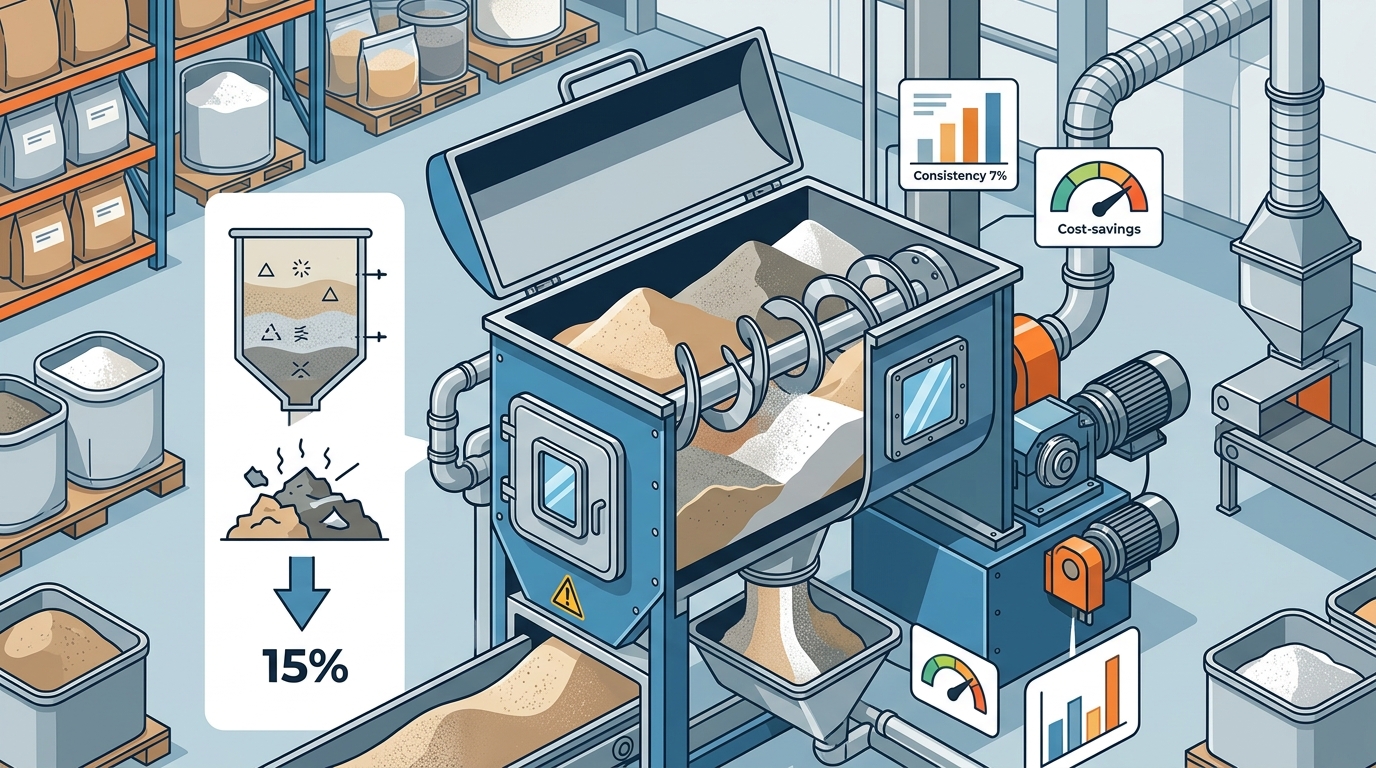
Industrial powder blending is a critical process in manufacturing, yet achieving uniform consistency remains a complex engineering challenge. According to recent industry data, improper mixing can lead to up to 15% product waste in bulk powder operations, directly impacting profit margins and quality control standards. Ribbon blenders have emerged as the dominant solution for dry powder mixing due to their ability to handle high-volume batches with exceptional homogeneity. This guide analyzes the mechanical advantages, selection criteria, and operational benefits of ribbon blenders to help you identify the optimal equipment for your production line.
Understanding Ribbon Blender Mechanics
A ribbon blender is a type of dry powder mixer that uses a U-shaped trough and a double-shafted ribbon agitator. The agitator consists of two concentric ribbons wound in opposite directions. This design creates a complex flow pattern that ensures thorough mixing of dry materials. The inner ribbon pushes material toward the center, while the outer ribbon pushes material toward the ends. This counter-current flow prevents dead zones and ensures uniform distribution of ingredients.
The ribbon blender is defined as a high-efficiency mixing vessel designed specifically for dry powders, granules, and pastes. Its mechanical simplicity allows for easy cleaning and maintenance, which is crucial for industries with strict hygiene standards. The U-shaped trough design facilitates complete discharge of materials, minimizing residue and cross-contamination between batches.
JDA Progress manufactures high-quality packaging equipment and mixing solutions to help you maximize efficiency, minimize cost, and boost your ROI. Their expertise in designing tailored mixing systems ensures that each ribbon blender meets specific operational requirements. With over 35 years in business, JDA Progress has sold thousands of packaging machines to customers in North America and around the world, establishing a reputation for reliability and performance.
Key Advantages for Powder Mixing
Ribbon blenders offer several distinct advantages over other mixing technologies. First, they provide excellent mixing uniformity, even with large batch sizes. This is particularly important for industries such as food, pharmaceuticals, and chemicals, where consistent product quality is paramount. The ability to handle a wide range of particle sizes and densities makes ribbon blenders versatile for various applications.
Second, ribbon blenders are energy-efficient compared to other mixing methods. The mechanical action of the ribbons requires less power than high-speed impellers or pneumatic systems. This efficiency translates to lower operational costs over the lifespan of the equipment. Additionally, the simple design reduces maintenance requirements, further lowering total cost of ownership.
Third, ribbon blenders are easy to clean and inspect. The open design allows for easy access to the interior of the trough, facilitating thorough cleaning between batches. This is essential for maintaining hygiene standards and preventing cross-contamination. JDA Progress offers comprehensive service and parts support to ensure your equipment remains in optimal condition.
How to Choose the Best Ribbon Blender
Selecting the right ribbon blender depends on several factors, including batch size, material properties, and production volume. The capacity of the blender should match your production needs, with a typical range from 50 liters to several thousand liters. The material of construction is also critical, with stainless steel being the standard for food and pharmaceutical applications due to its corrosion resistance and ease of cleaning.
The design of the ribbons is another key consideration. Standard ribbons are suitable for most dry powders, but specialized designs may be required for materials with high moisture content or cohesive properties. The speed of the agitator also affects mixing time and quality. Higher speeds can reduce mixing time but may cause segregation of materials with different densities.
JDA Progress provides expert guidance to help you find the perfect solution for your business. Their team of packaging experts can assess your specific requirements and recommend the most suitable ribbon blender model. Visit their Demo Centre to see their equipment in action and experience the quality firsthand.
Ribbon Blender vs. Other Mixers
While ribbon blenders are highly effective for dry powders, other mixing technologies may be more suitable for specific applications. For example, paddle blenders are often used for materials with higher moisture content or sticky properties. Paddle blenders use a different agitator design that provides a gentler mixing action, reducing the risk of material degradation.
Another alternative is the V-blender, which is commonly used in the pharmaceutical industry for blending powders with similar densities. V-blenders rely on gravity and tumbling action to mix materials, which can be advantageous for delicate products. However, they are less effective for materials with significant density differences.
The following table compares ribbon blenders with other common mixing technologies:
| Mixer Type | Best For | Advantages | Limitations |
|---|---|---|---|
| Ribbon Blender | Dry powders, granules | High uniformity, energy-efficient | Not ideal for sticky materials |
| Paddle Blender | Moist powders, pastes | Gentle mixing, handles cohesion | Slower mixing times |
| V-Blender | Pharmaceutical powders | Excellent for similar densities | Limited to free-flowing materials |
| Bin Blender | Large batches, fragile products | No moving parts in product zone | Longer cycle times |
Maintenance and Operational Efficiency
Proper maintenance is essential for ensuring the longevity and performance of your ribbon blender. Regular inspection of the ribbons, seals, and bearings can prevent costly breakdowns and downtime. JDA Progress offers comprehensive service and parts support to help you maintain your equipment. Their team of technicians can perform routine maintenance, repairs, and upgrades to keep your ribbon blender running smoothly.
Operational efficiency can also be improved through proper training and process optimization. JDA Progress provides training and factory acceptance tests to ensure your team is proficient in operating and maintaining the equipment. This training helps maximize the return on investment and ensures consistent product quality.
Additionally, monitoring key performance indicators such as mixing time, energy consumption, and product uniformity can help identify areas for improvement. Data-driven insights can guide process adjustments and equipment upgrades, leading to continuous improvement in production efficiency.
Key Takeaways
- Ribbon blenders are the preferred choice for dry powder mixing due to their high uniformity and energy efficiency.
- JDA Progress has over 35 years of experience in manufacturing packaging and mixing equipment.
- The U-shaped trough design ensures complete discharge and minimizes residue.
- Stainless steel construction is standard for food and pharmaceutical applications.
- Proper maintenance and training are crucial for maximizing equipment lifespan and performance.
- JDA Progress offers a 15,000 square foot facility in Vaughan with a permanent showroom for demonstrations.
- Expert consultation can help select the optimal ribbon blender for your specific production needs.
Frequently Asked Questions
What is a ribbon blender used for?
A ribbon blender is primarily used for mixing dry powders, granules, and pastes. It is widely used in industries such as food, pharmaceuticals, and chemicals to achieve uniform product consistency.
How does a ribbon blender work?
A ribbon blender works by using a double-shafted ribbon agitator inside a U-shaped trough. The ribbons move material in opposite directions, creating a complex flow pattern that ensures thorough mixing.
What are the advantages of a ribbon blender?
Advantages include high mixing uniformity, energy efficiency, ease of cleaning, and versatility in handling different types of dry materials.
How do I choose the right ribbon blender size?
The size of the ribbon blender should be determined by your batch size requirements and production volume. JDA Progress experts can help you select the appropriate capacity for your needs.
Can ribbon blenders handle sticky materials?
While ribbon blenders are designed for dry powders, they can handle materials with some moisture content. However, for highly sticky or cohesive materials, a paddle blender may be more suitable.
What maintenance does a ribbon blender require?
Regular maintenance includes inspecting and replacing worn ribbons, seals, and bearings. JDA Progress offers comprehensive service and parts support to ensure your equipment remains in optimal condition.
Where is JDA Progress located?
JDA Progress is located in the north end of Toronto, Ontario, with a 15,000 square foot facility in Vaughan that includes a permanent showroom for machine demonstrations.
Does JDA Progress offer training?
Yes, JDA Progress provides training and factory acceptance tests to ensure your team is proficient in operating and maintaining the equipment.
Contact JDA Progress for Expert Solutions
Choosing the best ribbon blender for your powder mixing needs requires expert guidance and high-quality equipment. JDA Progress is a trusted packaging equipment manufacturer with over 35 years of experience. Their team of experts can help you find the perfect solution for your business, maximizing efficiency and boosting your ROI. Visit their Contact Us page to request a quote or schedule a demonstration at their Vaughan showroom. Experience the quality and reliability of JDA Progress packaging solutions today.