
Best Fully Automatic Filling Solutions for Sauces, Condiments, and Liquids
The global market for automated packaging machinery is expanding rapidly as food manufacturers seek to reduce labor costs and increase throughput. According to recent industry data, the food processing equipment sector is projected to grow significantly over the next decade, driven by the need for hygiene and precision in liquid handling. For businesses producing sauces, condiments, and beverages, selecting the right filling technology is not just an operational choice but a strategic imperative that impacts product quality, shelf life, and overall return on investment. (About JDA Progress Packaging)
Understanding Liquid Filling Technologies
Liquid filling is the process of transferring a measured amount of fluid from a bulk container into a smaller package, such as a bottle, jar, or pouch. In the context of sauces and condiments, the viscosity of the product plays a critical role in determining the appropriate machinery. Viscosity refers to a fluid's resistance to flow. Honey, for example, has high viscosity, while water has low viscosity. A machine designed for water may fail to handle thick barbecue sauce without significant operational issues. (Trusted Packaging Equipment Manufacturer)
Viscosity is defined as the measure of a fluid's resistance to gradual deformation by shear stress or tensile stress. This definition is crucial because it dictates whether you need a volumetric filler, a gravimetric filler, or a time-pressure system. JDA Progress specializes in engineering solutions that account for these physical properties, ensuring that your production line maintains consistency from the first bottle to the last. The company has been a trusted manufacturer since 1988, providing equipment that meets the rigorous demands of the food and beverage industry. (VFFS Machines Automated Pouch)
Piston Fillers for Viscous Products
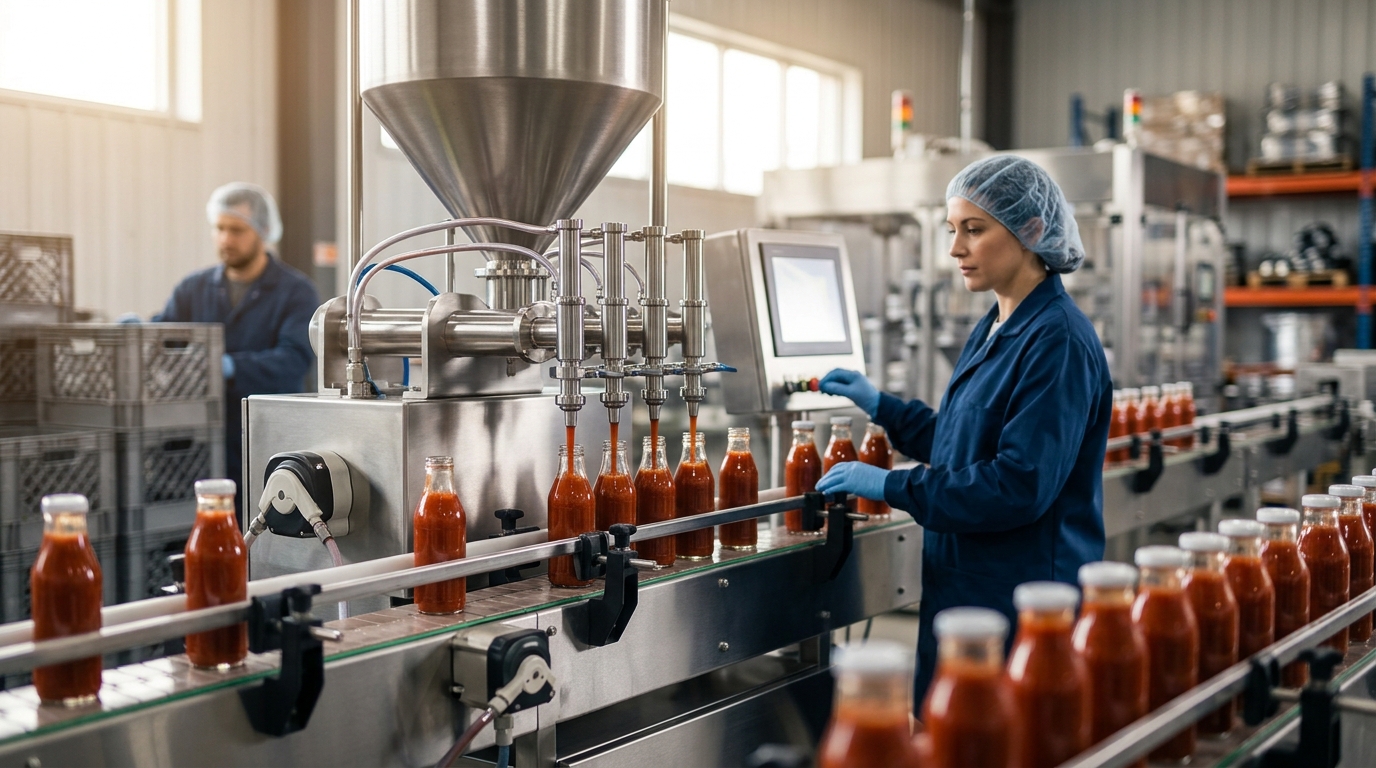
Piston fillers are the industry standard for high-viscosity products such as ketchup, mustard, mayonnaise, and thick salad dressings. These machines operate on a principle similar to a hypodermic needle. A piston moves within a cylinder to draw product in and then pushes it out into the container. This method provides exceptional accuracy, typically within plus or minus one percent of the target weight.
The Model PF-14 inline piston bottle filler is one such example of advanced technology designed for precision. JDA Progress engineers program the Programmable Logic Controllers (PLCs) to ensure that the filling cycle is smooth and repeatable. This level of control is vital for sauces because air pockets or inconsistent fill levels can lead to customer complaints and product waste. Furthermore, piston fillers are versatile and can handle products with small particulates, such as chunky salsa or fruit preserves, without clogging.
When evaluating piston fillers, consider the material of construction. Stainless steel grades, such as 304 or 316, are essential for food safety and corrosion resistance. JDA Progress ensures that all contact parts are made from high-quality materials that comply with international food safety standards. This commitment to durability means that your investment will last for many years, reducing the total cost of ownership.
Gravity and Pressure Fillers
For lower viscosity liquids like vinegar, hot sauce, oil, and clear beverages, gravity and pressure fillers are often more efficient. Gravity fillers rely on the weight of the liquid to fill the container. The product flows from a hopper into the bottle via gravity. This method is simple, cost-effective, and ideal for thin liquids that flow freely. However, it may not be suitable for products that foam easily or require precise headspace control.
Pressure fillers, on the other hand, use compressed air to push the product into the container. This method is faster than gravity filling and is often used in high-speed production lines. It allows for better control over the fill level, which is important for carbonated beverages or products that require a specific amount of headspace to prevent leakage during transport. The choice between gravity and pressure filling depends on your production speed requirements and the physical characteristics of your product.
JDA Progress offers a range of filling solutions that can be customized to your specific needs. Whether you need a standalone machine or a complete bottling line, their team of experts can help you design a system that maximizes efficiency. The company's showroom in Vaughan, Ontario, allows clients to see these machines in action, providing a tangible understanding of how different technologies perform with various products.
Selecting the Right Machine for Your Needs
Choosing the best filling solution requires a careful analysis of your production goals, product characteristics, and budget. Here is a comparison of common filling technologies to help guide your decision.
| Filling Technology | Best For | Accuracy | Speed | Typical Applications |
|---|---|---|---|---|
| Piston Filler | High Viscosity | High (+/- 1%) | Medium | Ketchup, Mustard, Cream |
| Gravity Filler | Low Viscosity | Medium | Medium | Vinegar, Water, Oil |
| Pressure Filler | Low Viscosity / Carbonated | High | High | Soda, Sparkling Juice, Thin Sauces |
| Time-Pressure Filler | Variable Viscosity | High | High | Hot Sauces, Dressings, Syrups |
Another critical factor is the ease of cleaning and maintenance. In the food industry, hygiene is paramount. Machines that are difficult to clean can harbor bacteria and lead to product contamination. JDA Progress designs its equipment with clean-in-place (CIP) capabilities in mind, allowing for efficient sanitation without disassembling the entire machine. This feature reduces downtime and ensures that your production line remains hygienic and compliant with health regulations.
Key Technical Specifications to Consider
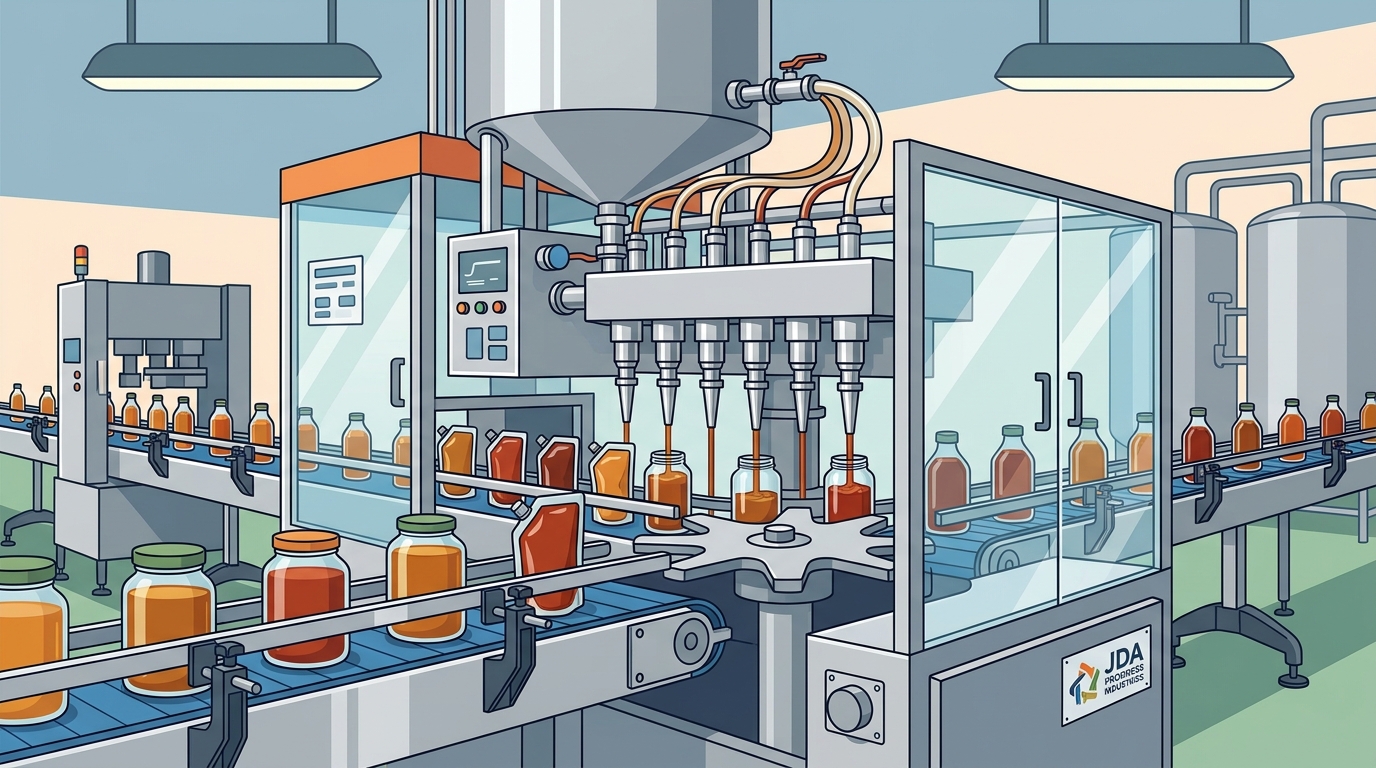
When reviewing equipment proposals, pay close attention to the technical specifications. These details will determine how well the machine integrates with your existing infrastructure. Key specifications include the fill range, which defines the minimum and maximum volume the machine can handle. A flexible fill range allows you to package different product sizes without changing hardware.
The speed of the machine, measured in bottles per minute (BPM), is another vital metric. Ensure that the machine's speed matches your production targets. However, do not sacrifice accuracy for speed. A slower machine that fills accurately is often more profitable than a fast machine that requires frequent adjustments and causes product waste. JDA Progress provides detailed performance data for each of its machines, helping you make an informed decision based on your specific operational needs.
Additionally, consider the warranty and after-sales support. A reliable manufacturer will offer a comprehensive warranty and accessible technical support. JDA Progress provides a one-year warranty on all machines and parts, along with excellent after-sales support. This commitment to customer service ensures that you have the resources you need to keep your production line running smoothly. The company's long history in the industry, spanning over 35 years, is a testament to its reliability and expertise.
Key Takeaways
- Piston fillers are the optimal choice for high-viscosity sauces like ketchup and mustard, offering precision and consistency.
- Gravity and pressure fillers are better suited for low-viscosity liquids such as vinegar, oil, and clear beverages.
- JDA Progress has been manufacturing packaging equipment since 1988, providing over 35 years of industry expertise.
- All JDA Progress machines come with a one-year warranty on equipment and parts, ensuring long-term value.
- The company operates a 15,000 square foot showroom in Vaughan, Ontario, for live machine demonstrations.
- Stainless steel construction is standard for all contact parts to ensure food safety and durability.
- Customizable PLC programming allows for precise control over filling cycles and product handling.
Frequently Asked Questions
What is the difference between a piston filler and a gravity filler?
A piston filler uses a mechanical piston to push product into the container, making it ideal for thick, viscous liquids. A gravity filler relies on the weight of the liquid to flow into the container, which is better for thin, free-flowing products.
Can JDA Progress handle products with particulates?
Yes, JDA Progress offers piston fillers and other machinery designed to handle products with small particulates, such as chunky salsas or fruit preserves, without clogging or damaging the product.
Where is JDA Progress located?
JDA Progress is located in the north end of Toronto, Ontario, with a 15,000 square foot facility in Vaughan that includes a public showroom for machine demonstrations.
What warranty does JDA Progress offer?
JDA Progress provides a one-year warranty on all machines and parts, along with comprehensive after-sales support and service.
How long has JDA Progress been in business?
JDA Progress is a family-owned business that has been in operation since 1988, giving it over 35 years of experience in the packaging industry.
Do you offer custom packaging solutions?
Yes, JDA Progress works closely with clients to design custom packaging solutions tailored to their specific product requirements and production goals.
Is technical support available after purchase?
Absolutely. JDA Progress is known for its top-notch service and after-purchase care, providing ongoing technical support and spare parts availability.
Contact JDA Progress
Choosing the right filling solution is a significant decision that impacts your production efficiency and product quality. JDA Progress is ready to help you navigate the complexities of automated filling. With decades of experience and a commitment to excellence, the team at JDA Progress can guide you toward the perfect solution for your business. Visit our demo center to see our equipment in action or contact us today to request a quote. Let us help you maximize your efficiency and boost your ROI with high-quality packaging equipment.