
How Rotary Pouch Fillers Handle Viscosity and Size
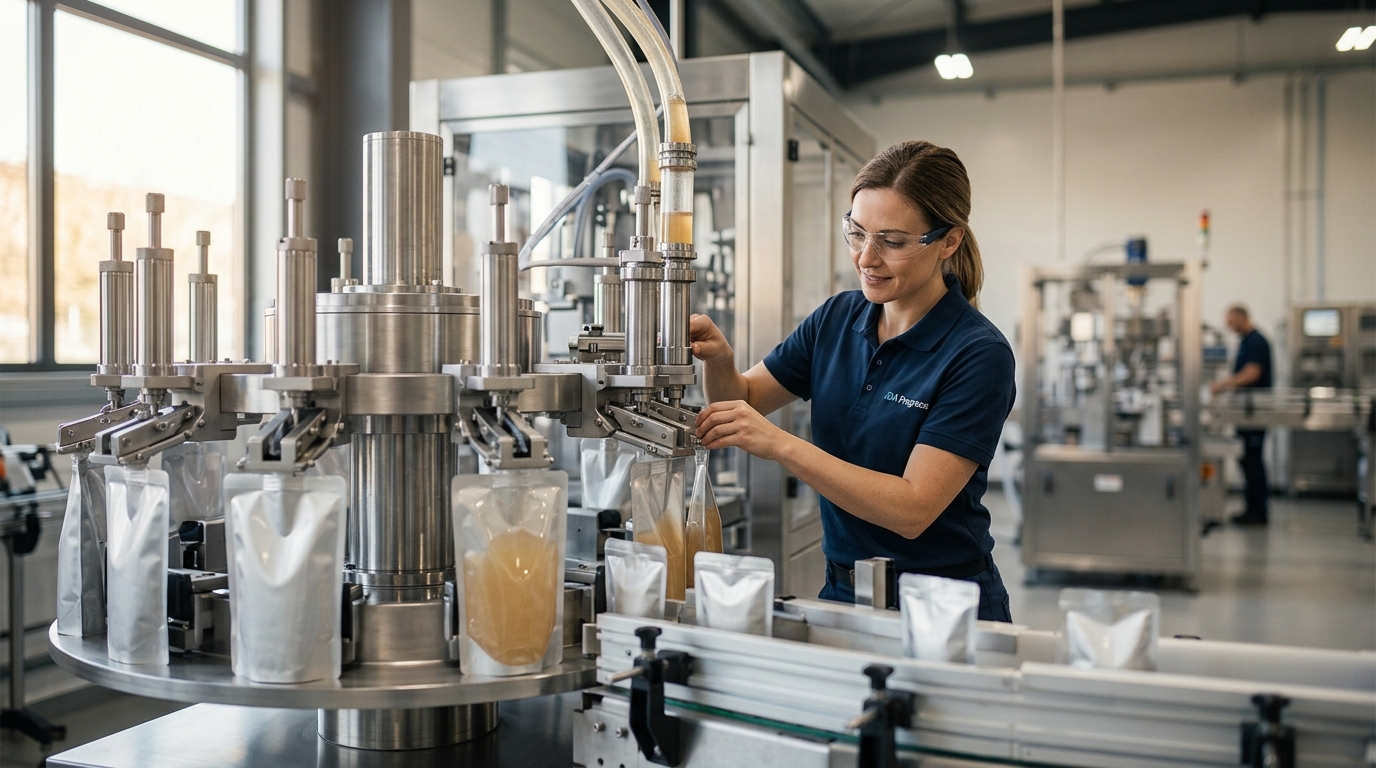
Rotary pouch fillers manage varying product viscosities and container sizes through adjustable volumetric dosing mechanisms and flexible mechanical clamping systems. By utilizing interchangeable filling heads and pneumatic or servo-driven actuators, these machines maintain high throughput while ensuring precise fill weights for both thin liquids and thick pastes. This adaptability allows manufacturers to switch between product lines with minimal downtime, preserving operational efficiency and product integrity.
Managing Product Viscosity in Rotary Systems
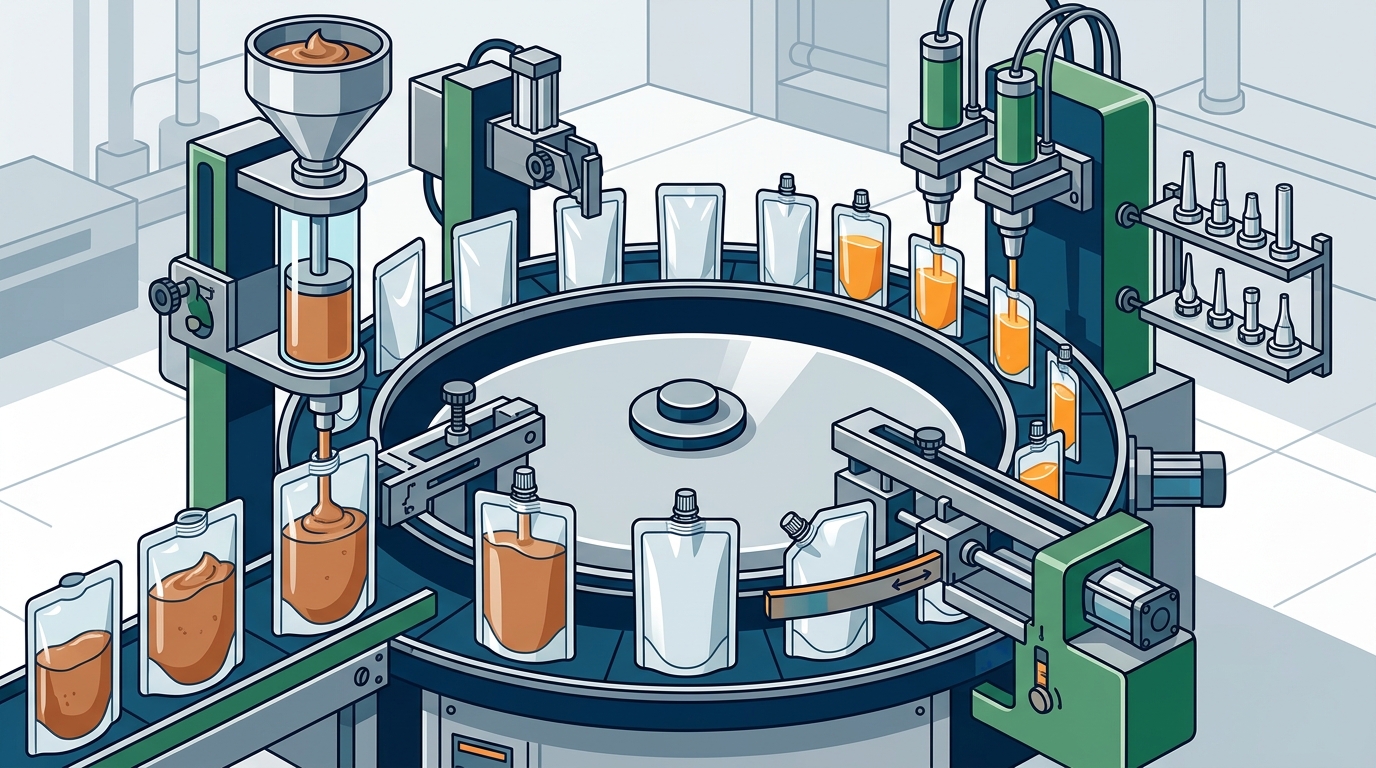
Viscosity is the measure of a fluid's resistance to flow, which directly impacts how a filler dispenses product into a pouch. High-viscosity products, such as thick creams or dense sauces, require different mechanical forces than low-viscosity liquids like water or thin oils. Rotary fillers address this by employing specialized filling heads that can be swapped or adjusted to match the specific rheological properties of the material.
For low-viscosity liquids, volumetric fillers often use piston or pump mechanisms that rely on gravity and pressure to dispense the product quickly. In contrast, high-viscosity materials may require auger or tube fillers that push the product through a controlled channel. This distinction is critical because using a standard liquid filler for a thick paste can lead to incomplete fills or clogging. By selecting the appropriate filling head, operators ensure that the machine can handle the product's consistency without compromising speed or accuracy.
The implication for production lines is that versatility in viscosity handling reduces the need for multiple dedicated machines. A single rotary platform can accommodate a wide range of products, from thin beverages to dense nutraceuticals, by simply changing the dosing component. This flexibility is a key advantage for manufacturers who produce diverse product lines.
Accommodating Different Container Sizes
Container size is a primary variable in rotary filler design, as the machine must align the filling nozzle with the pouch opening precisely. Rotary systems use a rotating carousel or turntable that holds the pouches in fixed positions. As the carousel rotates, each pouch moves through distinct stations for opening, filling, and sealing. The mechanical design of these stations allows for adjustments to accommodate pouches of varying heights and diameters.
Adjustable clamping mechanisms are essential for securing pouches of different sizes. Pneumatic clamps or mechanical jaws can be repositioned to grip the top of the pouch firmly, preventing spillage during the filling process. For smaller pouches, the clamps may need to be closer together, while larger pouches require a wider span. This adjustability ensures that the pouch remains stable and aligned with the filling head, regardless of its dimensions.
The ability to handle multiple container sizes on a single machine is a significant operational benefit. It allows manufacturers to run different product SKUs on the same line, reducing the need for separate equipment. This capability is particularly useful for companies that produce a range of package sizes for the same product, such as travel-sized and full-sized pouches.
Mechanical Adjustments and Changeover Efficiency
Changeover efficiency is a critical factor in the performance of rotary pouch fillers. When switching between products with different viscosities or container sizes, the machine must be adjusted quickly to minimize downtime. Modern rotary fillers are designed with user-friendly interfaces and quick-release mechanisms that facilitate these changes. For example, filling heads can often be swapped in minutes, and clamp positions can be adjusted using simple hand tools or digital controls.
The use of programmable logic controllers (PLCs) further enhances changeover efficiency. Operators can store recipes for different products, including fill volume, speed, and clamp settings. When switching products, the operator simply selects the appropriate recipe, and the machine automatically adjusts its parameters. This reduces the risk of human error and speeds up the transition between production runs.
Efficient changeovers directly impact overall equipment effectiveness (OEE). By minimizing the time spent on adjustments, manufacturers can increase their production capacity and reduce costs. This is especially important in high-volume environments where even small delays can have a significant impact on output.
Impact on Production Speed and Accuracy
Production speed and accuracy are closely linked to how well a rotary filler handles viscosity and size. High-speed rotary fillers can process hundreds of pouches per minute, but maintaining accuracy at these speeds requires precise control over the filling process. For low-viscosity liquids, the machine can operate at higher speeds because the product flows easily. For high-viscosity materials, the speed may need to be reduced to ensure that the product is dispensed completely and accurately.
Accuracy is also affected by the stability of the pouch during filling. If the pouch is not securely clamped, it may shift or tilt, leading to uneven fills or spillage. Adjustable clamping systems help maintain stability, ensuring that each pouch receives the correct amount of product. This consistency is crucial for meeting regulatory requirements and maintaining brand reputation.
The balance between speed and accuracy is a key consideration when selecting a rotary filler. Manufacturers must choose a machine that can handle their specific products at the desired throughput while maintaining high fill accuracy. This balance is achieved through careful machine design and proper setup.
Key Takeaways
- Rotary pouch fillers use interchangeable filling heads to manage different product viscosities.
- Adjustable clamping mechanisms allow the machine to secure pouches of various sizes.
- Quick-change features and PLC recipes minimize downtime during product switches.
- High-viscosity products may require slower speeds to ensure accurate filling.
- Stable pouch alignment is critical for maintaining fill accuracy at high speeds.
- Versatile rotary systems reduce the need for multiple dedicated machines.
Frequently Asked Questions
Can a single rotary filler handle both liquids and pastes?
Yes, by using interchangeable filling heads such as piston, auger, or tube fillers, a single rotary platform can handle a wide range of viscosities.
How do rotary fillers adjust for different pouch sizes?
They use adjustable pneumatic or mechanical clamps that can be repositioned to grip pouches of varying heights and diameters securely.
What is the impact of viscosity on filling speed?
High-viscosity products often require slower filling speeds to ensure complete and accurate dispensing, while low-viscosity liquids can be filled at higher speeds.
How long does it take to change over between products?
With quick-release mechanisms and stored PLC recipes, changeovers can often be completed in minutes, minimizing downtime.
Why is pouch stability important in rotary filling?
Stable pouch alignment prevents shifting or tilting during filling, which ensures consistent fill volumes and reduces spillage.
Do rotary fillers require specialized training to operate?
Basic operation is straightforward, but proper setup and adjustment for different products may require training to ensure optimal performance.How do I choose the right filling head for my product?
Select a filling head based on your product's viscosity and consistency. Piston fillers are ideal for creams and sauces, while auger fillers work well for powders and granules.
Conclusion
Rotary pouch fillers offer a versatile solution for manufacturers dealing with diverse product viscosities and container sizes. By leveraging adjustable mechanical components and advanced control systems, these machines provide the flexibility needed to maintain high throughput and accuracy. For businesses looking to optimize their packaging lines, understanding the capabilities of rotary fillers is essential. JDA Progress offers a range of filling solutions designed to meet the specific needs of your production environment, ensuring that your packaging process is both efficient and reliable.