
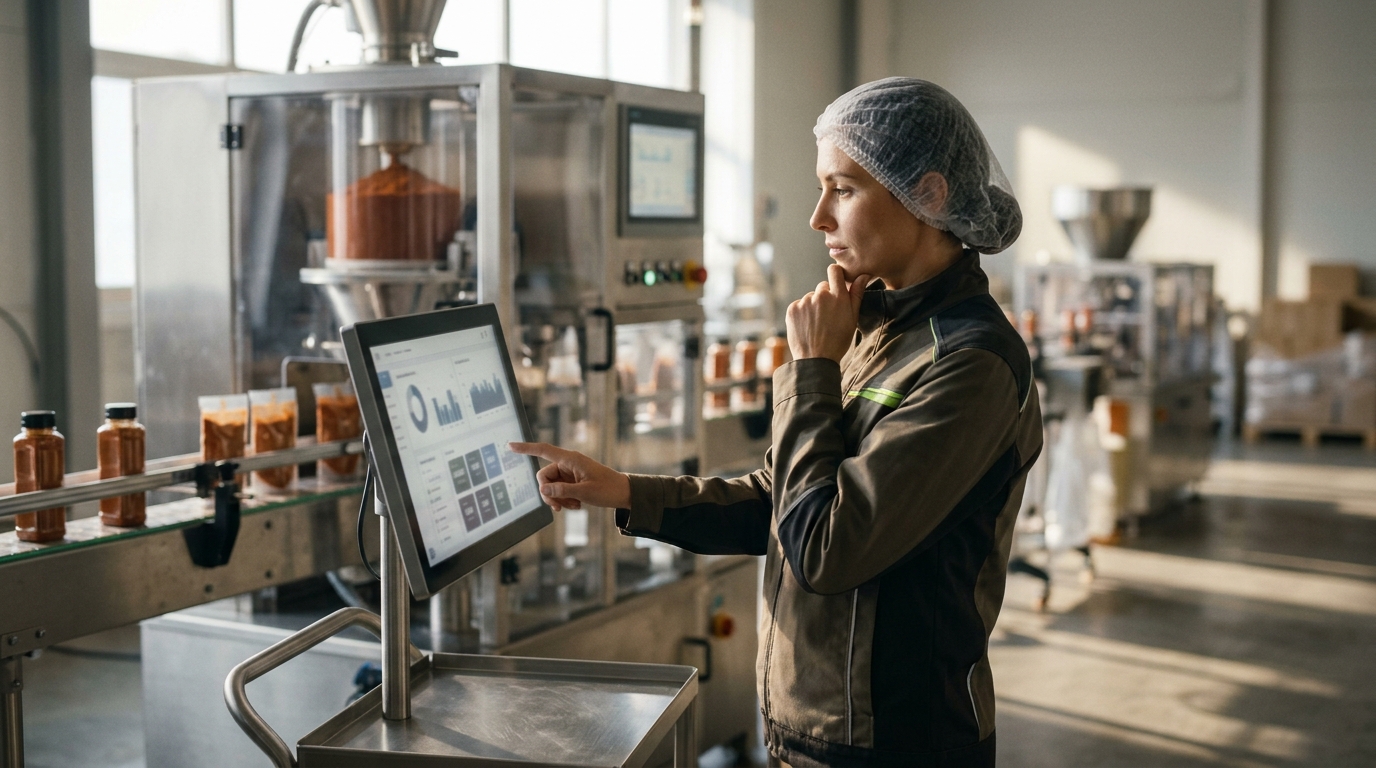
Determining the correct production speed for a spice filling machine requires analyzing your daily output targets against realistic machine cycle times. You must account for changeovers, cleaning, and maintenance downtime to find the true required speed. JDA Progress helps manufacturers calculate these metrics accurately to prevent bottlenecks and ensure consistent output for both pouches and bottles.
Understanding Production Speed Metrics
Production speed is the number of units a machine can fill per minute, hour, or shift. This metric is distinct from theoretical maximum speed, which ignores real-world variables like product viscosity and container handling. For spice fillers, the actual speed is often lower than the nameplate rating due to the need for precise dosing of fine powders.
When evaluating a machine, you must look at the sustained speed over a full shift, not just a short burst. Fine spices like turmeric or paprika can bridge or clog augers if the speed is too high. A machine that runs at 60 units per minute for ten seconds may only sustain 40 units per minute over an eight-hour shift. This sustained rate is the true production speed you need to plan your operations.
Calculating Required Speed for Pouches
For pouch filling, the required speed depends on the complexity of the packaging process. A vertical form fill seal (VFFS) machine forms, fills, and seals the pouch in one continuous motion. This process is faster than handling pre-made pouches because it eliminates the step of picking and opening a pre-formed bag. However, the film must be fed at a consistent rate to ensure the seal is strong.
Consider a facility that needs to produce 10,000 pouches of ground cumin per day. If the machine runs for 8 hours, that is 480 minutes. Dividing 10,000 by 480 gives a required speed of approximately 21 pouches per minute. This calculation assumes zero downtime. In reality, you must add time for film changes, cleaning, and minor adjustments. A safe buffer is to require a machine speed that is 20% higher than your calculated minimum. Therefore, you would look for a machine capable of at least 25 pouches per minute to ensure you meet your daily target.
Determining Speed for Bottle Filling
Bottle filling presents different challenges compared to pouches. The machine must handle the container, dose the product, and then move the bottle to the next station. For spices, this often involves an auger filler that pushes the powder into the bottle. The speed is limited by how quickly the bottle can be indexed and how fast the auger can rotate without causing dust or clumping.
Take a facility bottling 500ml jars of chili powder. If the target is 5,000 jars per shift, the math is similar. 5,000 divided by 480 minutes equals roughly 10.4 jars per minute. However, bottle handling is more mechanical. If the unscrambler or conveyor cannot feed bottles fast enough, the filler will starve. JDA Progress designs complete bottling lines where the unscrambler, filler, and capper are synchronized. This ensures that the filling speed is not the only bottleneck, but part of a balanced system.
Impact of Product Viscosity and Particle Size
The physical properties of the spice directly impact the achievable speed. Fine, free-flowing powders like salt or sugar can be filled at higher speeds than coarse, clumpy blends. A blend with herbs or seeds may require a slower auger speed to prevent bridging, where the powder forms an arch in the hopper and stops flowing. This phenomenon can reduce effective speed by 30% or more.
For example, a machine rated for 50 units per minute with fine powder may only achieve 35 units per minute with a coarse blend. This is why it is critical to test your specific product on the machine before purchase. JDA Progress offers a test and demo center where you can bring your spices and see the actual speed in action. This hands-on approach ensures that the machine you buy can handle your specific product at the speed you need.
Accounting for Downtime and Changeovers
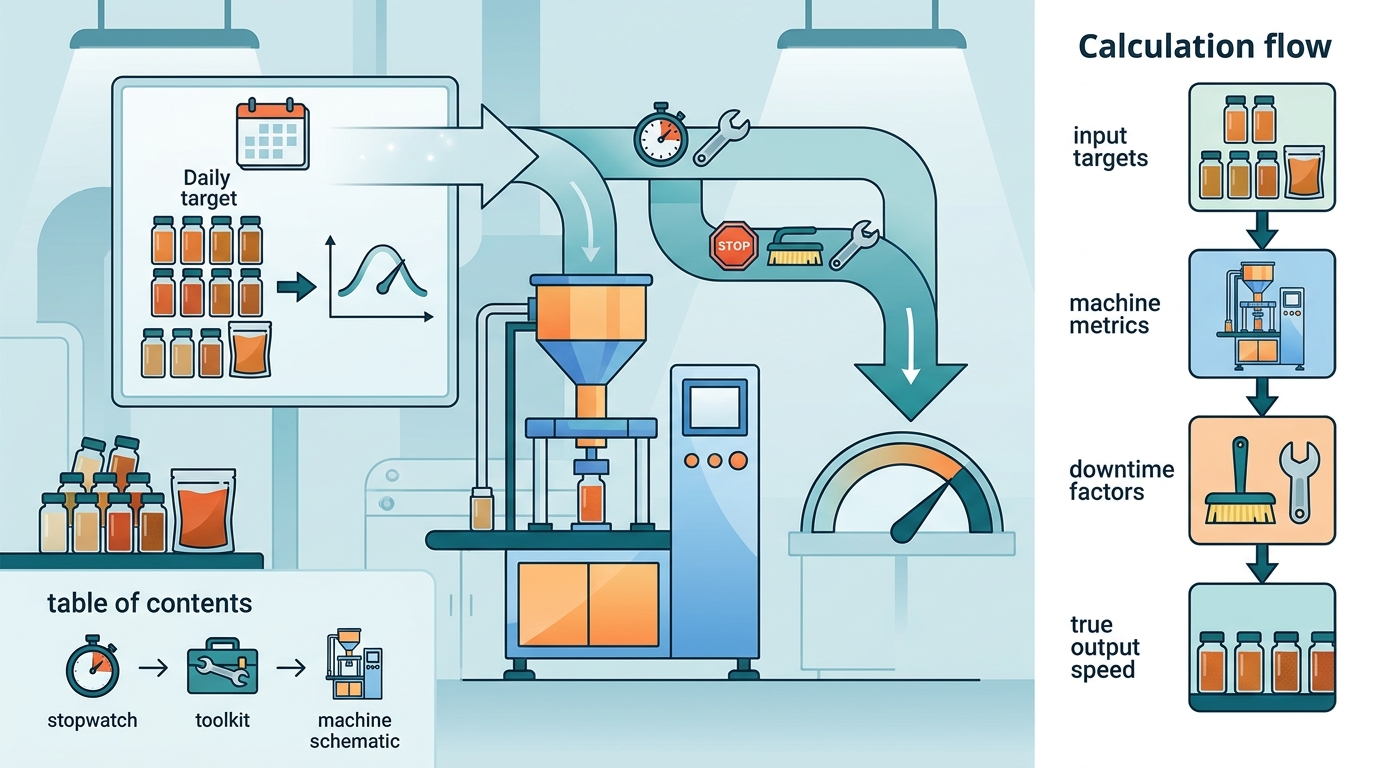
Production speed is not just about filling; it is about total throughput. Changeovers between different spice varieties can take 15 to 30 minutes. During this time, the machine is not producing. If you switch between five different spices in a shift, that is 75 to 150 minutes of downtime. This significantly reduces your effective production speed.
To calculate the true required speed, you must subtract all non-production time from your total shift time. If your shift is 480 minutes and you have 100 minutes of downtime, you only have 380 minutes of production time. Your required speed is now your daily target divided by 380, not 480. This adjustment is crucial for accurate planning. It ensures that you do not buy a machine that is too slow for your actual operating conditions.
Key Takeaways
- Production speed is the sustained number of units filled per minute, not the theoretical maximum.
- Calculate required speed by dividing daily targets by available production time, not total shift time.
- Add a 20% buffer to your calculated speed to account for minor downtime and adjustments.
- Product viscosity and particle size can reduce effective speed by up to 30% for coarse blends.
- Changeovers between products significantly impact total throughput and must be factored into speed calculations.
- Test your specific product on the machine to verify actual speed before purchasing.
- Balance the filling speed with upstream and downstream equipment to avoid bottlenecks.
Frequently Asked Questions
What is the average speed of a spice filling machine?
The average speed varies by machine type and product. VFFS machines for pouches typically run between 20 and 60 units per minute. Auger fillers for bottles often run between 10 and 40 units per minute. The exact speed depends on the product and machine configuration.
How do I calculate the required speed for my facility?
Divide your daily production target by the number of available production minutes. Subtract all downtime, including cleaning and changeovers, from your total shift time. Then, add a 20% buffer to account for unexpected issues.
Does product type affect filling speed?
Yes, product type significantly affects speed. Fine, free-flowing powders fill faster than coarse, clumpy blends. Blends with herbs or seeds may require slower speeds to prevent bridging and ensure accurate dosing.
What is the difference between theoretical and actual speed?
Theoretical speed is the maximum speed a machine can achieve under ideal conditions. Actual speed is the sustained speed over a full shift, accounting for downtime, cleaning, and product variability. Actual speed is always lower than theoretical speed.
How can I test a machine with my product?
You can bring your product to a manufacturer's test and demo center. JDA Progress has a facility in Vaughan where you can run live demos with your specific spices. This allows you to verify the actual speed and performance before making a purchase.
What is the impact of changeovers on production speed?
Changeovers reduce total production time, which increases the required speed to meet daily targets. If you switch between multiple products, you must account for the time it takes to clean and adjust the machine for each new product.
How does JDA Progress help with speed calculations?
JDA Progress works with customers to analyze their production needs and calculate the required speed. They provide guidance on machine selection and configuration to ensure that the equipment meets your specific throughput requirements.
Next Steps for Your Facility
Accurately calculating production speed is the first step toward optimizing your packaging line. By understanding the variables that affect speed, you can make informed decisions about equipment selection. JDA Progress offers expert guidance and live demonstrations to help you find the right machine for your needs. Visit our Test and Demo Centre to see our machines in action with your products. Our team is ready to help you achieve the production speed you need for success.